A tired patio can drag down the mood of your whole backyard. You feel it the second you step outside: the chairs look scattered, the floor feels flat, and nothing invites you to stay longer than ten minutes. Good outdoor spaces do the opposite. They pull you in without asking for attention.
The best patio makeover ideas are not about copying a showroom setup or buying a truckload of matching furniture. They work because they solve the hidden problems first: poor flow, weak lighting, no sense of scale, and surfaces that feel forgotten. Once those pieces lock into place, the space starts to feel calm, useful, and lived in.
That is why the smartest patio updates often start with restraint, not spending. A tighter layout, a better shade plan, and one strong material choice can shift the whole tone of a yard. If you want outside help shaping the story and visibility of a home project, even a resource on outdoor brand storytelling can spark a different way of thinking about presentation. Your patio is not a storage zone with chairs. It is part of how your home speaks.
Start With the Ground, Not the Accessories
Most people begin with cushions, lanterns, and side tables. That order feels fun, but it often leads to a patio that looks decorated rather than designed. The floor, edges, and boundaries decide whether the space feels settled or sloppy, and no pillow can rescue a weak base.
Hardscape choices that make the yard feel finished
Old concrete is not always the enemy. Stained concrete, brushed finishes, oversized outdoor rugs, and gravel borders can turn a dull slab into something intentional without ripping everything out. One of the most overlooked wins in backyard patio design is contrast: a smooth floor paired with rough planters, or pale pavers next to deep green planting. That tension gives the eye something to hold onto.
A small yard benefits from visual discipline. Pick one main surface and let it lead. When people mix brick, tile, random stepping stones, and two rug patterns in the same footprint, the patio starts to feel restless. You do not need more variety. You need a surface story that stays coherent from the back door to the outer edge.
Drainage matters more than style boards admit. If water sits near the house, if moss keeps creeping in, or if the slab slopes the wrong way, fix that first. A patio that looks pretty for three dry days and then turns slick after one storm is not a makeover. It is a delay.
Define edges so the patio feels like a room
A patio without boundaries often feels unfinished, even when the furniture is expensive. Low planters, a narrow raised bed, slatted privacy screens, or a clean border of stone can tell the eye where the space begins and ends. That single move creates the comfort people usually chase with more décor.
The sharpest outdoor living space designs borrow one idea from interiors: containment. A living room feels settled because the walls frame it. Outside, you have to build that feeling yourself. A row of tall grasses on one side, a bench on another, and a pergola overhead can do the same job without making the yard feel boxed in.
This is where many backyards finally click. Once the edges are defined, the patio stops floating in the middle of grass like an afterthought. It starts behaving like a destination.
Patio Makeover Ideas That Fix Layout Before You Spend More
A patio fails faster from bad arrangement than from cheap materials. You can have good chairs, solid stone, and nice planters, yet the space still feels awkward because nothing is placed with movement in mind. People should be able to walk through the yard without weaving around a table leg or squeezing past a fire pit.
Build zones that match how you live outside
You do not need a giant yard to create zones. You need honest priorities. If you eat outside twice a week but lounge outside four nights a week, give more space to seating than dining. Too many patios are arranged for fantasy living instead of actual use, and the mismatch shows up fast.
A smart patio furniture layout leaves breathing room around the biggest pieces. Chairs should pull out without bumping a planter. A loveseat should not block the path to the garden hose. Side tables should sit close enough to use, not drift off like decorative extras. That is the difference between a patio that photographs well and one that gets used.
Corners deserve more respect than they get. A neglected corner can become the best seat in the yard with one angled chair, one lantern, and one tall pot. Not glamorous. Effective. That kind of move stretches the room without adding clutter.
Keep the walkway sacred
Paths are the silent engine of good design. When they are ignored, the whole patio feels cramped, even if it is technically large enough. Protect the line from the back door to the yard, the grill, or the gate. Once circulation gets blocked, the space starts feeling annoying, and annoyance kills comfort.
This is also where budget patio upgrades can outperform expensive overhauls. Sometimes the answer is not new furniture. It is removing one oversized chair, shifting the dining table six inches, or swapping a bulky bench for stackable stools. Better flow often costs less than a single throw pillow bundle.
There is a hard truth here: more furniture does not make a patio feel richer. It makes it feel crowded. Leaving open space is not wasted square footage. It is what gives the rest of the design room to breathe.
Use Shade, Light, and Height to Control the Mood
Once the layout works, the next layer is atmosphere. This is where a patio stops being serviceable and starts becoming magnetic. Shade cools the day, lighting shapes the evening, and vertical elements give the yard presence even before you notice the furniture.
Shade changes behavior, not only comfort
People stay longer where the sun feels manageable. That sounds obvious, yet many patios are designed as if everyone enjoys sitting in direct afternoon heat. They do not. A simple umbrella helps, but fixed or semi-fixed shade usually feels more grounded: pergolas, sail shades, vine-covered frames, or a line of small trees placed with intent.
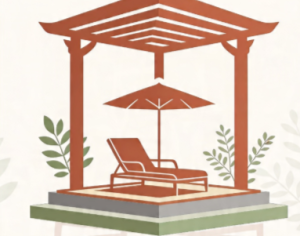
Strong backyard patio design does not treat shade as an accessory bolted on later. It makes shade part of the structure. A narrow pergola can visually anchor a dining area. A fabric canopy can soften a stone-heavy yard. Even a well-placed tree can turn a harsh slab into the best place on the property by late afternoon.
Height does another job at the same time. Tall planters, screens, climbing plants, and hanging lights pull the eye upward, which makes a flat patio feel layered. Without that vertical pull, many backyards read as one long horizontal line. Functional, maybe. Memorable, no.
Light the patio for faces, not for drama alone
String lights get all the attention because they are easy and charming. They also get misused. One zigzag line stretched too high rarely lights anything that matters. You want light where people sit, talk, eat, and walk. That means layering: low path lights, soft overhead glow, wall-mounted fixtures, candles, or lantern clusters near seating.
A strong outdoor living space feels warm because light hits faces gently and shadows stay controlled. Harsh white bulbs flatten the mood. Overlit patios feel like parking lots. Underlit patios feel moody for five minutes and then become a nuisance when someone drops a glass or misses a step.
The best evening patios have a little darkness left in them. Not gloom. Depth. You want enough light to move with ease, enough glow to flatter the room, and enough shadow to let the yard keep some mystery.
Finish With Texture, Planting, and Personality
After the structure, flow, and mood are working, the last layer is character. This is where people often rush and ruin good progress. Personality is not built by piling on trendy objects. It comes from choosing a few signals and repeating them with discipline.
Texture does more work than color overload
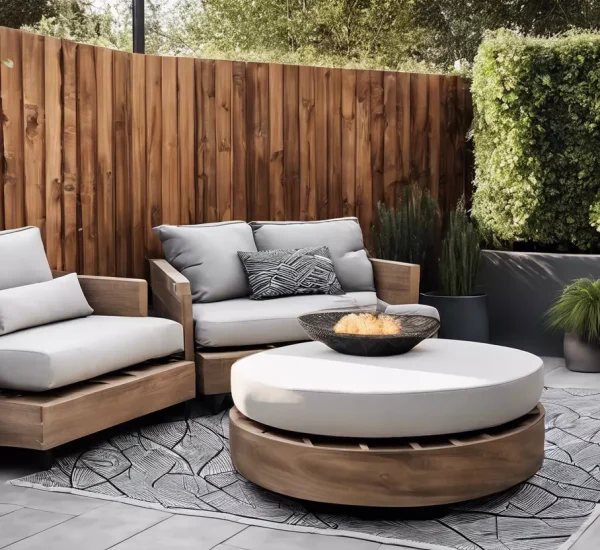
Most patios do not need louder colors. They need richer surfaces. Clay pots, teak, linen-look outdoor fabric, brushed metal, rough stone, and woven accents bring depth without shouting. When every piece tries to be the star, the yard feels restless. When textures carry the interest, the patio feels mature.
This is why patio furniture layout and material choice should talk to each other. A compact seating group in all one finish can feel flat, but add a stone side table, a ribbed planter, and a textured rug, and the whole scene wakes up. You do not need a rainbow. You need friction between materials.
Scale matters here as much as style. Tiny accessories scattered across a large patio look timid. One oversized pot, one bold bench cushion pattern, or one long trough planter usually lands harder than six decorative bits competing for attention.
Planting should soften, frame, and disguise
Plants are not garnish. They are problem-solvers. They hide ugly fence lines, cool hard corners, soften sharp materials, and carry the patio into the rest of the yard. When people skip planting and spend everything on furniture, the space often feels exposed and unfinished.
The smartest budget patio upgrades often come from the garden aisle, not the furniture store. A row of evergreen shrubs can create privacy faster than a construction project. Herb planters near a dining zone add scent and purpose. Tall grasses can make a narrow edge feel deliberate instead of neglected.
Here is the move most people miss: plant for shape first, color second. Good form lasts longer than bloom season. A patio with strong green structure still looks composed in the off months, and that steadiness gives the whole yard more staying power.
A final note matters here. Personality should come from choices that mean something to you, not from filling every empty spot. A backyard reads better when a few details carry conviction.
The strongest patios are rarely the ones with the most stuff. They are the ones where every decision seems to know why it is there. That is what separates a space you visit from a space you settle into.
A smart patio does not ask you to admire it from the kitchen window. It invites you outside and rewards you for staying. That is the standard worth chasing. When you work through layout, structure, mood, and planting in that order, patio makeover ideas stop being scattered inspiration and start becoming a plan you can trust.
So choose one weak point and attack it first. Fix the flow, define the edge, create shade, or plant the border. Do that well, and the rest of the yard will stop feeling like a project and start feeling like home.
Frequently Asked Questions
What are the best patio makeover ideas for a small backyard?
Start with layout, not décor. Small patios improve fast when you define the edges, protect the walking path, and use fewer but larger pieces. One strong rug, one compact seating zone, and vertical planting usually beat a crowded mix of small accessories.
How can I improve backyard patio design without replacing the whole patio?
Refresh the surface before you rebuild it. Concrete stain, outdoor rugs, gravel borders, and cleaner planting lines can change the look of the space without tearing out the slab. Fix drainage and visual clutter first, then add furniture and lighting.
How do I create an outdoor living space that feels comfortable year-round?
Build for comfort in layers. Use shade for summer, lighting for early evenings, texture for warmth, and planting for privacy. When the patio has shelter, soft surfaces, and a clear layout, you will use it longer across more seasons.
What is the best patio furniture layout for entertaining guests?
Keep conversation and movement in balance. Seat people close enough to talk, leave open paths to doors and grills, and place side tables within reach. A layout works when guests can move through it easily without interrupting everyone already seated.
Which budget patio upgrades make the biggest visual difference?
Painted planters, better lighting, a large outdoor rug, fresh cushions, and taller greenery punch above their price. Small shifts in layout can matter even more. Sometimes removing one bulky item improves the whole patio faster than buying three new ones.
How do I make a patio look expensive on a modest budget?
Pick fewer finishes and repeat them with intent. Matching wood tones, larger planters, warm lighting, and cleaner edges create a polished look. The patio feels richer when it is edited well, not when it is packed with decorative extras.
What plants work best around a backyard patio?
Choose plants by shape, height, and maintenance level before bloom color. Evergreen shrubs, ornamental grasses, herbs, and climbing vines give structure and soften hard surfaces. The best patio plants frame the space and solve privacy or visual gaps at the same time.
How often should I update or refresh a patio space?
Give it a quick reset every season and a deeper review once a year. Clean surfaces, rethink the layout, replace tired textiles, and check lighting and drainage. A patio stays inviting when you treat it like a living part of the home, not a finished display.