A patio stops being useful the moment it becomes an afterthought. Too many outdoor spaces look good for six weeks, then slide into neglect the second the weather shifts, cushions fade, or the first cold evening sends everyone back inside. That is a design mistake, not a climate problem.
The smartest approach is to style a patio as a space that changes mood without changing identity. You do not need a full makeover every few months. You need a steady foundation, a few seasonal swaps, and the discipline to stop buying pieces that only work in one version of the year. That is where most patios fall apart.
A better patio feels lived in across spring mornings, hot summer nights, windy autumn afternoons, and crisp winter evenings. It holds up because the choices behind it are flexible, not flashy. If you want ideas, inspiration, or ways to sharpen your outdoor styling decisions, looking at seasonal home and lifestyle coverage can help you spot patterns that last longer than a single trend cycle.
The goal is simple: build a space that keeps inviting you back, no matter what month is on the calendar.
How to style a patio with a strong year-round base
The biggest mistake people make is decorating for a season before they build for all seasons. A patio that works year-round starts with the bones: layout, surfaces, seating, shade, and materials that still make sense when the weather changes and the novelty wears off.
If your base is weak, every seasonal update turns into camouflage. That gets expensive fast. A good foundation, on the other hand, lets you change the feeling of the space with a few smart moves instead of a shopping spree.
Choose furniture that survives style shifts
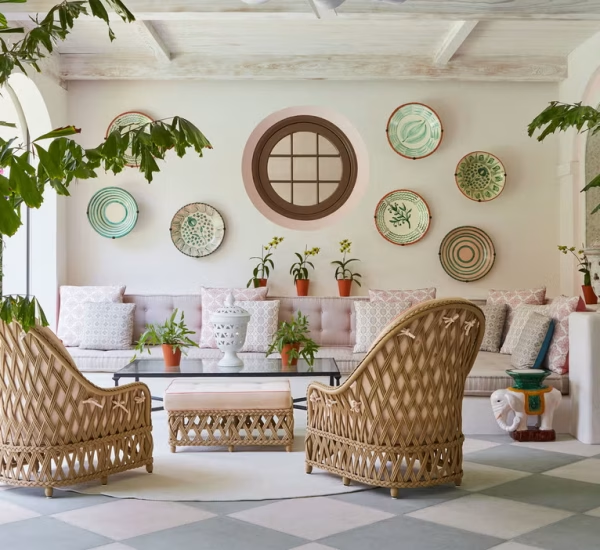
Your core seating should not belong to one season alone. Wicker can work, but only when it feels clean and grounded instead of beach-themed. Powder-coated metal holds up well because it does not drag the whole patio into one visual lane. Teak ages with character, which matters when your outdoor living space needs to look intentional in both bright sun and grey skies.
That is why neutral structure beats themed furniture every time. A warm wood frame, a black metal chair, or a simple sectional in stone or sand gives you room to shift the mood around it. You can push it toward spring with light fabrics, toward summer with stripes, toward fall with texture, and toward winter with darker layers. The frame stays steady while the styling moves.
Most people shop by season, not by lifespan. That is backwards. The better question is whether a chair still looks right when the flowers are gone, when the heat feels heavy, or when you need a blanket within ten minutes of sitting down. Good patio furniture ideas begin there.
Build around zones, not random pieces
A patio feels polished when each part of it knows its job. One zone can handle lounging. Another can support dining, drinks, or reading. Even a small patio needs some sense of purpose, because clutter grows when every item is trying to do everything at once.
This matters more than people think. When there is no clear layout, you end up adding side tables you do not need, oversized planters that block movement, or decor that looks good in photos but makes the space awkward to use. A tight footprint demands sharper editing, not more objects.
Try anchoring each zone with one visual cue. That might be an outdoor rug under seating, a narrow table against a wall, or two matching planters that frame an entrance point. The patio starts reading as one composed room instead of a pile of outdoor leftovers. That is the difference between decoration and design.
Use texture and fabric to create seasonal patio decor
Once the foundation is settled, fabric does most of the emotional work. The right textile choices can make the same patio feel airy in April, relaxed in July, grounded in October, and warm in January. That is why seasonal change should start with surfaces you can lift, fold, store, and replace without stress.
This is where people either get it right or go far too far. You do not need endless themed accessories. You need texture, contrast, and a clear sense of what each season should feel like when you step outside.
Rotate soft layers instead of replacing everything
The easiest way to refresh seasonal patio decor is through cushions, throws, and outdoor rugs. Spring does well with washed linen looks, soft green tones, pale clay, and faded blue. Summer can handle sharper contrast, though it still benefits from restraint. A stripe, a sun-faded coral, or a crisp off-white pillow works because it feels awake without shouting.
By autumn, the patio should gain weight. Not physical weight. Visual weight. Add textured weaves, deeper earth tones, and fabrics that catch lower light well. Rust, olive, charcoal, and muted mustard all work when they are used with control. Winter styling should not try to imitate an indoor living room, but it should feel more protective. Heavier throws, weather-safe cushions in deeper shades, and layered rugs can make the space feel held together even on cold days.
The trap is over-rotating. Once every cushion has a pattern, nothing feels calm. The strongest seasonal patio decor keeps one or two threads constant, whether that is a neutral base color, a repeated stripe, or the same natural material running across planters and textiles.
Let color respond to light, not trends
Outdoor color behaves differently from indoor color. Sun washes things out. Shade cools them down. Evening light softens edges. That means a color that looked rich in a store can look flat on a patio by noon. You need to judge outdoor styling by daylight and dusk, not by retail lighting.
That is also why copying trend palettes from social media often fails. A patio is exposed, changing, and tied to its surroundings. The tones that work best tend to echo what is already nearby: garden greens, brick reds, stone greys, sandy neutrals, or the dark tone of fencing and trim. Your outdoor living space should feel connected to the home, not staged beside it.
A good rule is to give each season one lead note and one supporting note. Spring might lean soft sage with cream. Summer might lean navy with white. Autumn might lean rust with brown-black accents. Winter often looks stronger with charcoal, evergreen, and natural wood. The patio starts feeling seasonal without slipping into costume.
Make an outdoor living space feel alive through plants and lighting
Furniture gives a patio structure. Fabric gives it mood. Plants and lighting give it pulse. Without them, even a well-designed patio can feel finished in the wrong way—complete, but lifeless. This is the layer that makes people linger.
It also changes faster than any other part of the space. Plants grow, fade, drop, recover, and surprise you. Light changes by hour and by season. That is why this part of patio styling should feel flexible and slightly imperfect. A little looseness helps.
Plant for shape first, flowers second
Most patios rely too much on bloom and not enough on form. Flowers are welcome, but they are temporary performers. Shape carries the patio when the blooming cycle ends. That means you need planters with structure: grasses, clipped herbs, trailing ivy, dwarf evergreens, sculptural shrubs, or leafy varieties that hold their silhouette longer than one brief peak.
This is one of the strongest year-round patio decisions you can make. A rosemary pot near seating, a small olive tree in a sunny corner, or tall grasses that move in the wind bring life to the patio even when flower color is absent. The space still reads as active, not abandoned.
Mix planter heights, but do not scatter them without thought. One large container usually does more than four tiny ones. Grouping in threes can work, though not every patio needs that formula. Sometimes two oversized pots at the edge of a seating zone create more order than a dozen small accents spread around the perimeter.
Layer light like you would indoors
Bad lighting ruins good patios. One harsh overhead bulb can flatten the entire mood. On the other hand, a mix of low, warm light sources can make an ordinary setup feel magnetic after sunset.
Think in layers. String lights can help, though they are too often treated as the whole answer. Use them as background, not the star. Add a lantern on a side table, a rechargeable lamp near the dining zone, or low solar path lights that guide movement without turning the patio into a runway. Candlelight works when protected from wind, and a fire bowl adds both glow and gravity when the season turns cold.
This is where patio furniture ideas often miss the point. People shop for the sofa, then leave lighting until the end. That is backwards. You sit outside longer when the light feels kind. The right glow can rescue a modest patio. Harsh light can make a beautiful one feel cheap.
Adapt the patio for weather without losing its style
A patio that only works under perfect conditions is not finished. Real life includes heat, rain, wind, pollen, damp evenings, and those odd days when the air changes by the hour. Styling has to account for that. Otherwise, your patio looks good in theory and stays empty in practice.
The aim is not to outfight the weather. It is to work with it. The smartest patios feel prepared without looking defensive.
Add comfort tools that still look intentional
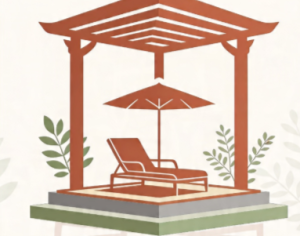
Shade is not optional in warm months. A patio umbrella, pergola, shade sail, or even outdoor curtains can shape the space while protecting it. The mistake is choosing them as pure utility, with no thought for proportion or tone. A giant umbrella in the wrong color can dominate the entire view.
Pick weather tools as design elements. A black umbrella frame can sharpen a loose patio layout. Neutral curtains can soften hard edges. A pergola creates vertical presence and gives climbing plants or lights a place to live. These choices do more than solve a problem. They shape how the space reads.
Cold-weather comfort deserves the same attention. Storage benches for throws, covered baskets for cushions, a compact fire feature, or even an outdoor-safe screen to block wind can extend patio use without turning the area into a gear dump. The best seasonal patio decor often includes pieces that do two jobs and announce neither.
Keep the space easy to reset after weather hits
A smart patio is easy to recover. That matters more than most styling advice admits. If rain leaves you with soaked cushions, tangled textiles, dirty corners, and nowhere to put anything, you will stop using the space. Style should reduce friction, not create it.
That means choosing washable covers, stackable side chairs, quick-dry fabrics, and storage that sits close to where you use things. A deck box hidden behind a bench can save a patio from daily mess. Hooks near a door can hold lanterns, blankets, or outdoor table linens. Even a slim shelf for plant tools can stop clutter from spreading.
Here is the counterintuitive part: less permanent decor often makes a patio feel more complete. When items are easy to move, clean, and store, the space stays in use. And a patio that gets used always looks better than one that has been styled into stiffness.
The same thinking strengthens your year-round patio strategy. You are not decorating a display. You are building a place you can return to after the wind picks up, after the rain passes, after the leaves drop, and after the season changes its mind again.
A patio earns its place when it keeps showing up for you across the year, not when it peaks for one bright stretch and then fades into storage. The best designs do not chase seasons one by one. They create a strong base, then let texture, plants, lighting, and weather-ready details shift the mood with less effort and more control.
That is what makes style a patio more than a decorating goal. It becomes a way of thinking about outdoor living with patience. You stop buying for the moment and start shaping a space that still feels right six months later. That change alone saves money, cuts clutter, and makes the patio feel less fragile.
The next step is simple: walk outside, strip the space back to its core pieces, and decide what deserves to stay through every month of the year. Build from there, layer with intention, and let each season add character instead of chaos. A patio that can hold all four seasons will reward you every time you open the door.
Frequently Asked Questions
How do you decorate a patio for all four seasons?
Start with neutral, durable furniture and change the mood through cushions, throws, lighting, and plants. That keeps the patio steady while giving you room to shift colors and textures as the weather changes.
What are the best seasonal patio decor ideas on a budget?
Swap pillow covers, add one outdoor rug, rotate planters, and use portable lighting. Small changes create a strong seasonal shift without forcing you to replace large furniture or buy themed pieces each quarter.
How can I make my outdoor living space feel cozy in winter?
Add layered blankets, warm-toned lighting, wind protection, and a fire feature if your layout allows it. Deep-toned cushions and textured fabrics also help the patio feel grounded instead of bare in cold weather.
Which patio furniture ideas work best year-round?
Choose teak, powder-coated metal, or weather-safe wicker in neutral shapes and colors. Those materials and silhouettes adapt well to different styling choices and do not feel locked into one season.
What colors work best for a year-round patio?
Natural tones tend to last longest because they respond well to changing light. Greys, sand, charcoal, olive, muted blue, and warm wood tones usually stay attractive across spring, summer, autumn, and winter.
How often should I update seasonal patio decor?
A full seasonal reset four times a year is enough for most patios. In between, make smaller adjustments based on weather, plant growth, or how you are using the space during that stretch of the year.
What plants are best for a year-round patio look?
Go for a mix of evergreen structure, herbs, grasses, and a few seasonal bloomers. That gives the patio shape and movement even when flowers are out of season or weather conditions turn rough.
How do I protect patio style during bad weather?
Choose quick-dry fabrics, keep storage nearby, and use shade or wind-control features that match the design. A patio stays stylish longer when it is easy to reset after rain, heat, dust, or falling leaves.