A tired patio changes the mood of your whole home faster than most people admit. You can have a polished kitchen, a neat hallway, and spotless floors indoors, but if the outdoor space feels neglected, the house still reads unfinished. That is why patio updates matter more than flashy purchases or one-off decorating trends.
The good news is that you do not need a contractor, a full rebuild, or a shopping spree that empties your weekend budget. Most patios lose their appeal for simple reasons: the layout stops making sense, materials start fighting each other, and small signs of wear pile up until the space feels flat. A sharper plan fixes that. Start with the bones, then layer in comfort, then give the area a point of view. If you want ideas that connect style with visibility, this kind of outdoor brand storytelling mindset works surprisingly well at home too. Your patio should not feel like leftover square footage. It should feel chosen.
Start With the Surfaces Before You Buy Anything
Most people make the same mistake first: they shop before they look down. That is backwards. A patio can carry plain furniture and still feel inviting when the surfaces are clean, repaired, and visually calm. It can also carry expensive pieces and still feel sloppy when the floor is stained, the edges are chipped, or the transitions into the yard look accidental.
You do not need perfection here. You need order. Once the base looks intentional, every other choice starts working harder for you.
Clean lines beat expensive materials every time
A pressure wash, a scrub brush, and a few hours of attention can change the entire tone of a patio. Dirt has a way of flattening texture. Stone loses contrast. Pavers lose depth. Concrete starts looking older than it is. Cleaning is not glamorous, but it gives you back the detail you already paid for when the space was built.
Repairs matter in the same way. Hairline cracks, loose border stones, wobbling steps, and broken grout do more visual damage than people expect because they signal neglect before anyone sits down. Your eye catches disorder first. Fixing these small flaws brings quiet discipline to the space, and that discipline becomes the backdrop for everything else.
The smartest move is often restraint. If you have three surface finishes fighting for attention, reduce them. If your patio meets the lawn with no edge, define it. A crisp border, a clean threshold, or a single repeating material can pull an outdoor living space together faster than a cart full of accessories.
Color correction matters more than most homeowners think
Sun, rain, dust, and foot traffic bleach personality out of outdoor areas. That fading happens gradually, which is why people stop noticing it. Then they add new planters or cushions, hoping the space will wake up. It rarely does, because the old tones around them are still dragging the eye down.
Sometimes the answer is stain. Sometimes it is paint. Sometimes it is replacing only the worst-looking few pieces instead of all of them. A darkened fence panel behind pale seating can make the whole area look sharper. A fresh coat on trim can pull scattered details into one clear visual line. Even repainting a tired pergola changes how the patio reads from inside the house.
This is where judgment matters. Not every surface needs treatment. Some materials look better with age. Others look abandoned. Learn the difference. Patina adds character when the structure still feels cared for. Rot, chalking, and patchy fading do not. They make the whole outdoor living space feel like a project you keep postponing.
Rethink the Layout Like a Host, Not a Shopper
Once the base feels clean and settled, the next problem is usually flow. Many patios are crowded without being useful. Chairs face the wrong direction. Tables sit too close to walkways. Decor fills corners that should stay open. The fix is not more stuff. The fix is a better plan for how people actually move, sit, eat, and linger.
A good patio layout feels easy before it feels stylish. You should not have to step sideways around a planter, drag a chair to join a conversation, or balance a drink on a windowsill because the table ended up three feet too far away.
Patio furniture refresh should begin with scale, not fabric
People often treat seating as the star of the show, then wonder why the area feels cramped. Size is the first decision. Deep lounge chairs can look rich online and feel ridiculous on a modest slab. A narrow bistro set can disappear in a large yard and leave the patio feeling underdressed. Proportion makes the room, even outdoors.
A proper patio furniture refresh starts by measuring how much clearance you need between pieces. Leave enough room for a tray, a turning body, a dog weaving through ankles, a child running past, or an older guest easing into a seat. Outdoor comfort is not only softness. It is movement without friction.
That is why fewer pieces often feel better than a matched set. A bench paired with two lighter chairs can open the space. Small stools can act as tables when needed, then move aside. One larger anchor piece works well when the rest of the arrangement gives it air. A patio should never feel like a showroom display dragged outside.
Zones make a patio feel larger, even when it is not
The most convincing patios do not rely on size. They rely on purpose. One corner might handle coffee. Another might hold dinner. A side edge might support herbs, lanterns, or a slim console for serving. These shifts create shape without building walls.
You can mark zones with rugs, lighting, planter placement, or the direction of furniture. The trick is subtle separation. Hard lines can make a small patio feel chopped up. Soft cues guide the eye without making the space feel boxed in. That balance is where many backyard styling ideas fail. They copy dramatic setups from oversized homes and forget that most people need flexibility, not theater.
Think like someone who uses the space twice a day, not someone staging it for a photo. Morning light, evening shade, grill access, and where people naturally stand all matter more than symmetry. The best patios respect habits. They do not force them.
The Right Patio Updates Add Comfort You Can Feel
Visual appeal draws you out the door once. Comfort brings you back all season. That is the difference between a patio you admire and one you actually use. Many outdoor spaces look fine from the window and go empty week after week because they ignore heat, glare, wind, and the plain reality of sitting outside for more than twenty minutes.
That gap matters. A patio that asks too much from your body never becomes part of your routine.
Shade is not a luxury feature. It is the turning point.
The patio that gets used at noon and early evening has one thing in common: relief. Shade changes the mood, the temperature, and the amount of time you want to stay put. It also changes how furnishings hold up. Cushions fade slower. Surfaces stay cooler. Meals feel less rushed.
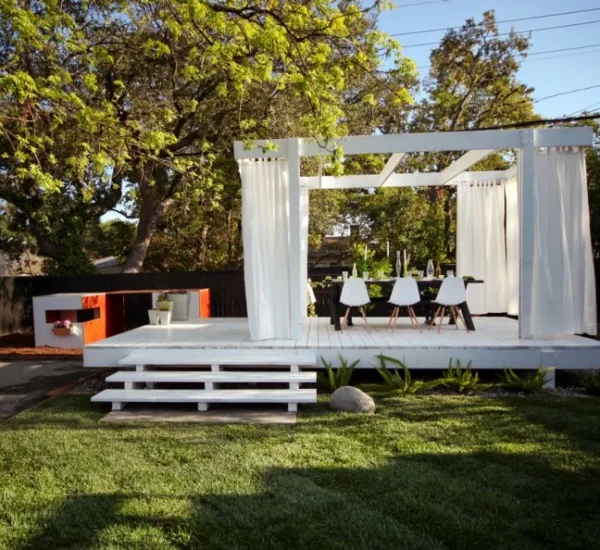
You do not need a permanent roof to get this right. A well-placed umbrella, a tensioned shade sail, or a simple pergola with climbing growth can do enough. The point is not drama. The point is protection where you sit most often. Even one shaded anchor zone makes the rest of the space feel more thoughtful.
Materials matter here too. Weather-resistant decor earns its keep when the sun hits hard or the air turns damp at night. Outdoor curtains that dry well, powder-coated frames, treated timber, and fabrics made to handle exposure save you from replacing pieces every time the season shifts. Buying pretty items that cannot survive your climate is not style. It is denial.
Layered comfort beats decorative clutter
A patio feels welcoming when your body gets an immediate yes from the space. That yes comes from seat height, back support, soft but durable textiles, and surfaces that feel placed for use. It does not come from filling every corner with objects.
One throw pillow can soften a chair. Eight pillows turn outdoor seating into a chore. One side table next to each main seat solves a real problem. A cluster of tiny accents solves none. This is where a second pass at patio furniture refresh often helps more than a first round of shopping. Remove what gets in the way. Keep what gets touched.
The same rule applies to mood pieces. Lanterns, ceramic pots, candle holders, and trays should support the rhythm of the space, not hijack it. Choose weather-resistant decor that still looks good when the wind shifts, pollen lands, or a surprise drizzle rolls through. Outdoor style has to survive contact with weather and life. Otherwise it is only pretending.
Finish With Personality, Not Noise
Once the patio works, then you earn the right to style it. This is where many spaces go off track. People confuse personality with quantity. They add colors that do not belong together, signs with no point, and accents that copy trends already fading out. The result is not charm. It is visual static.
A better patio has a point of view you can feel without having to decode it. Maybe it is calm and textural. Maybe it is crisp and graphic. Maybe it leans earthy and relaxed. Pick one direction and let the details support it.
Planting is the fastest way to soften hard edges
Most patios need something alive near the seating area. Hardscape alone can feel cold, especially when surfaces are pale, angular, or exposed to strong light. Plants add movement, softness, and a sense that the space belongs to the season rather than sitting outside it.
The smartest choice is not always lush abundance. Two large containers can do more than ten small ones. Repetition helps. Matching planters with varied planting heights create steadiness. Mixed pots can work, but they need a thread running through them, whether that is color, finish, or shape. Randomness is easy to buy and hard to make attractive.
This is one place where grounded backyard styling ideas separate themselves from copycat trends. Instead of choosing plants for the photo, choose for scale, light, and maintenance habits. If you hate daily watering, admit it now. If your patio bakes in afternoon sun, stop pretending delicate shade lovers will survive there. Good taste starts with honesty.
Lighting should change the pace, not blind the yard
Outdoor lighting fails when it tries too hard. Harsh overhead bulbs flatten the mood. Tiny solar stakes scattered everywhere make the yard look busy. String lights can work, but only when they follow the architecture instead of floating with no logic.
Think in layers. Low ambient light sets the tone. Focused light near doors and steps keeps the area usable. Accent lighting can lift a planter, a wall texture, or a dining zone. The aim is comfort with shape, not brightness for its own sake. You want the patio to feel slower at night, not louder.
This is also where a fresh outdoor look either holds together or falls apart. Daytime styling can hide weak lighting. Evening exposes it. If the patio loses warmth the moment the sun drops, the design was never finished. A good outdoor setup knows how to behave after dark.
A final note here: leave a little empty space. Not every edge needs filling. Not every wall needs hanging decor. A patio with room to breathe feels calmer, larger, and more expensive than one that keeps begging for attention.
A polished outdoor area is rarely built through one grand weekend project. It comes from better decisions made in the right order. You clean and repair first. You sort the layout next. You add comfort where your body will notice it. Then, and only then, you shape the mood. That sequence sounds ordinary, but it is what separates random improvements from patio updates that hold up month after month.
The smartest patios are not the busiest ones. They are the ones that understand how you live. They leave room for a slow breakfast, a late conversation, muddy shoes, a breeze that shifts the air, and the kind of quiet that makes you stay outside longer than planned. If your space still feels off, stop asking what to add and start asking what is getting in the way. Make one honest change this week, then let the patio prove it was waiting for less clutter and more intention all along.
Frequently Asked Questions
What are the first changes to make in an old patio?
Start with cleaning, repairs, and layout. Those three steps expose what still works and what needs replacing. New decor on top of grime or cracked surfaces wastes money and rarely changes the feel of the space in a lasting way.
How do I improve an outdoor living space without a full renovation?
Focus on structure before style. Clean the floor, define the edges, adjust furniture scale, and add one source of shade. Those moves change comfort and appearance at the same time without forcing you into a rebuild.
What does a patio furniture refresh usually include?
It usually means editing as much as buying. Measure the area, remove oversized pieces, improve seating comfort, add useful side surfaces, and choose fabrics built for sun and moisture. The goal is easier living, not a fuller patio.
Which backyard styling ideas work best for small patios?
Use fewer, larger elements instead of many small ones. A compact rug, two strong planters, slim seating, and a clear traffic path make a small patio feel settled. Small spaces look better when each piece has a job.
Why is weather-resistant decor worth the extra cost?
It saves you from replacing faded, warped, or mildewed items every season. Outdoor materials need to handle sun, damp air, dirt, and temperature shifts. When they cannot, the patio starts looking tired long before the season ends.
How can I make my patio feel inviting at night?
Layer the lighting. Use warm ambient light for mood, task lighting near doors or dining spots, and a few subtle accents for shape. Strong glare kills the atmosphere, so aim for gentle visibility instead of raw brightness.
How often should patio surfaces be cleaned or sealed?
Cleaning once at the start of the season and again as needed keeps buildup from taking over. Sealing depends on the material, but many surfaces benefit every few years. Follow the product guidance and watch for fading, stains, or water absorption.
What is the biggest mistake people make with outdoor design?
They buy decor before solving function. A patio that looks styled but feels awkward never gets used. Good outdoor design starts with movement, comfort, and weather sense. The pretty details work better once those basics are handled.