A good patio changes the way you live at home. It turns a leftover slab of concrete, tile, stone, or wood into the part of the house you reach for first when the light softens and the day stops pressing on your shoulders. The mistake most people make is treating that space like an afterthought, then wondering why it never feels inviting.
The truth is simpler than people admit: Patio Decor Tips only work when the space feels usable before it feels impressive. You do not need a giant yard, a luxury budget, or a designer’s mood board pinned to perfection. You need intention. You need scale that fits the footprint, furniture that invites you to stay, and details that make the area feel finished instead of half-staged. That is where most patios either come alive or fall flat.
The strongest outdoor spaces also carry a point of view. They do not throw in random lanterns, striped cushions, and a potted palm and call it style. They choose a mood and commit to it. If you want ideas that feel polished without feeling stiff, start with design principles that hold up in daily life and build from there. You can even look at how strong visual storytelling works in digital placements through outdoor brand coverage and borrow the same lesson: clarity beats clutter every time.
Start With Function Before You Chase Style
A patio that looks good for ten minutes but fails the moment you sit down is not well designed. It is dressed up. Style only lands when the space already knows what it is supposed to do for you.
That question sounds basic, yet it filters every design choice that follows. Are you using this patio for solo coffee in the morning, family dinners on warm nights, reading on weekends, or long conversations that drift past sunset? Each answer asks for a different shape, a different seating plan, and a different emotional tone. Once that use is clear, the room outside starts making sense.
Define the room without building walls
Outdoor areas need boundaries, even when there are no actual walls. The fastest way to make a patio feel lost is to let every item float with no visual edge, no center, and no sense of gravity.
A rug is often the first move because it tells your eye where the room begins. An exterior rug under a seating group does more than soften the floor. It gives the furniture a shared purpose. The chairs stop looking borrowed from another zone, and the table stops feeling stranded in the middle of nowhere.
That one decision changes your entire outdoor living space. It creates a visual pause between the patio and the yard, and that pause matters. People relax more easily when a space feels defined. The brain reads it as intentional, and intentional design always feels calmer than random placement.
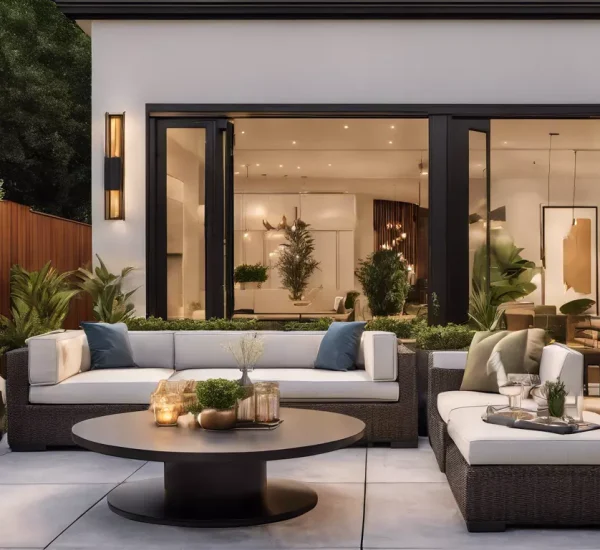
Lighting can do the same job after dark. A pair of sconces, a pendant over a dining spot, or a tight string of warm bulbs overhead can create a ceiling effect without any hard structure. The patio then starts reading like a room you happen to enjoy under the sky, not a spillover zone from inside the house.
Match furniture scale to the footprint
Small patios do not fail because they are small. They fail because people crowd them with pieces that belong on a resort terrace. Oversized sectionals, giant fire tables, and deep loungers can eat a compact space alive in a single afternoon.
The better move is restraint. You want furniture that fits the footprint while still leaving easy walking paths and a sense of openness. That does not mean buying flimsy pieces. It means choosing clean proportions and letting negative space do some of the visual work.
A smart patio furniture layout begins with movement, not shopping. You should be able to step into the space, pull out a chair, pass by a table, and sit down without turning sideways or bumping a planter with your shin. When people ignore circulation, the patio may photograph well, but it feels annoying in real life. Annoying never becomes stylish.
Bistro tables, slim-profile lounge chairs, benches with open legs, and nesting side tables often outperform bulkier options. They leave more air around each piece, and that air is part of the design. Not empty. Not wasted. Necessary.
Patio Decor Tips That Make a Space Feel Finished
Once function is locked in, the next layer is emotional. This is the part people notice without always knowing why. A patio can have the right furniture and still feel cold because the details do not speak to each other.
Finishing a patio has less to do with buying more and more to do with choosing better. The winning spaces edit themselves. They repeat texture, echo color, and let the materials carry some of the mood so the decor does not need to shout for attention.
Build a palette that can survive daylight
Outdoor color behaves differently than indoor color. Full sun flattens some shades, deep shadow darkens others, and greenery around the patio changes what every cushion and planter looks like from hour to hour.
That is why the best stylish patio ideas start with a tight palette instead of a shopping spree. Pick one base tone, one grounding material, and one accent direction. You might pair soft sand with matte black and faded olive. You might go with warm white, teak, and rust. You might lean into charcoal, clay, and pale sage. The exact combination matters less than the discipline behind it.
Patterns need the same restraint. One striped pillow and one small-scale print can add life. Six competing prints make the whole space feel nervous. A patio should lower your pulse, not raise it.
Texture often does more work than color outdoors. Woven rope, slatted wood, brushed metal, ceramic, stone, and linen-look fabrics create depth without noise. That is how you make a patio feel rich without making it look busy. The eye needs contrast, but it also needs rest.
Use repetition so the eye trusts the space
Design feels polished when it repeats itself in quiet ways. A shape returns. A finish shows up again. A color appears in more than one place. That repetition tells the eye there was a plan.
This is where outdoor decor accents earn their place. A pair of lanterns in the same finish as the dining chair frames, a planter glaze that picks up the tone in the cushions, or a ceramic stool that echoes the curve of a coffee table can tie the whole patio together without screaming for attention.
People often underestimate how much trust repetition builds. When materials and forms recur, the patio feels settled. When every item looks chosen from a different store on a different day with a different mood, the space feels temporary. You can sense that disorder before you even name it.
Try working in threes, but not by formula. One large object, one medium object, and one smaller detail often create better balance than three equal pieces. Equal size can feel staged. Varied size feels lived in. That difference is subtle, and it matters more than most people think.
Comfort Comes From Layering, Not Excess
There is a strange habit in outdoor design content where comfort gets confused with stuffing a patio full of soft things. More pillows, more poufs, more throws, more candles, more accessories. The result often looks generous and feels chaotic.
Comfort is not clutter. Comfort is control. It is shade where you need it, back support that lasts longer than ten minutes, surfaces within reach, and materials that still feel good after exposure to heat, dust, and changing weather.
Prioritize shade and softness in the right order
No patio feels welcoming when the sun is punishing and there is nowhere to retreat from glare. People spend far too much money on decor before solving the one issue that determines whether they will use the space at all.
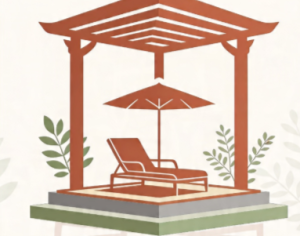
Shade deserves your money first. An umbrella, pergola, sail shade, or outdoor curtain setup does more for daily comfort than decorative extras ever will. Once the patio gives you relief, the rest of the design can start working harder.
That is also when your outdoor living space starts behaving like an extension of the home rather than a seasonal experiment. Shade changes timing. Suddenly, late morning coffee is possible. Lunch outside becomes realistic. Reading on a bright afternoon stops feeling like a test of endurance.
After that, soften with purpose. Seat cushions should support instead of collapsing. Back pillows should make upright seating easier, not force your posture into something awkward. A throw can add ease on cool nights, but only if it belongs to the mood of the space. The patio should feel prepared, not overpacked.
Add sensory details that work in real life
Comfort is physical, but it is also atmospheric. The air moves differently on a patio than it does indoors. Sounds carry. Surfaces heat up. Smells linger. Design that ignores those facts tends to look better than it lives.
This is where the better stylish patio ideas separate themselves from the obvious ones. A small tabletop fountain can soften street noise. Fragrant herbs near a dining area can make the whole space feel sharper and cleaner. A side table beside every primary seat removes the low-grade irritation of having nowhere to place a drink or book.
One of the most overlooked upgrades is a dimmable light source. Overhead string lights alone often flatten a patio into one generic mood. Add a floor lantern, a cordless lamp on the coffee table, or low wall lighting and the space gains depth. You create pockets of intimacy rather than one broad wash of light.
Good design pays attention to the body. That is the whole point. If a patio asks you to squint, shift uncomfortably, balance your glass on the ground, or sit in direct heat, it has failed long before anyone comments on the cushions.
The Best Patios Look Personal, Not Perfect
A stylish outdoor area should never feel like it was assembled to impress strangers who may never sit there. The most memorable patios carry signs of use, taste, and a few small decisions that belong to the people who live with them.
Perfection is a trap outside. Wind moves things. Plants grow unevenly. Fabrics wrinkle. A chair gets pulled into the sun because that is where you wanted to sit. None of that harms the design. In fact, a little looseness often gives the patio its pulse.
Mix structure with pieces that have character
A patio needs a backbone. It also needs at least a little soul. When every piece is bought as part of one matching set, the result can feel flat no matter how expensive it was.
Character comes from contrast. Maybe the dining chairs are clean and minimal, but the coffee table has texture and age. Maybe the planters are simple, but the side stool has a sculptural shape that breaks the rhythm in a good way. Maybe the main furniture is neutral, but one woven chair introduces a different note entirely.
This is where a thoughtful patio furniture layout helps again. Character pieces only work when they have room to be seen. If the patio is jammed full, every object competes for the same visual oxygen. Give the special pieces breathing room and they start telling the story for you.
Plants belong in that story too, but not as filler. A tall olive tree near a corner can create height. Cascading greenery can soften a hard edge. A cluster of herbs by the dining zone can turn a practical area into something warmer and more grounded. One good plant in the right spot does more than five forgettable ones lined up out of habit.
Edit the space until it feels calm
Most patios improve when you remove something. Not always. But often enough.
People keep adding because they are chasing that styled look they see in photos, yet photographs do not show the drag of excess. They do not show the way ten small objects become ten things to clean, move, protect, and work around. They do not show how visual noise chips away at rest.
Strong outdoor decor accents are selective. A tray on the coffee table, two planters with presence, one lantern at floor level, and one textile that adds softness may be enough. Once the essentials are there, every added object should earn its place. If it adds no function, no texture, and no emotional pull, it is not helping.
Editing also makes a patio look more expensive. That is one of the least glamorous truths in design, and one of the most useful. Luxury is often less about abundance and more about confidence. The space is not begging for approval. It knows when to stop.
The final test is simple: can you step outside, sit down, and feel the point of the space within thirty seconds? If the answer is yes, the patio is doing its job. If the answer is no, strip it back until the answer changes.
Style Lasts Longer When the Patio Can Age Well
A patio should not peak on the day you finish decorating it. It should settle in, soften over time, and still feel right months later when the season shifts and your routine changes with it.
That is why durable style matters more than trend chasing. Trend-led patios often date themselves fast because they are built around a look instead of a life. The better approach is to create a base that can handle small seasonal changes without losing its identity.
Choose materials that improve with time
Outdoor materials get tested harder than people expect. Sun fades, rain stains, dust settles, and heat changes how things feel under your hand. When materials are chosen only for first impressions, the patio often starts declining before the season even ends.
Wood with character, powder-coated metal, all-weather wicker with a clean weave, solution-dyed fabrics, stone, and glazed ceramics tend to hold up because they carry some visual depth even as they age. They do not rely on looking untouched. That is an advantage outside.
A patio built from surfaces that wear well also gives you more design freedom later. You can swap a few textiles, change plantings, or rotate table decor without needing a full reset. That flexibility is what keeps the space alive rather than frozen.
The smartest patios are not fragile. They are forgiving. You can live in them. That matters.
Refresh with season, not with panic
You do not need to redesign the whole patio every few months to keep it feeling current. Small shifts carry more effect than dramatic overhauls when the foundation is already strong.
This is another place where stylish patio ideas get misunderstood. Freshness does not come from replacing everything. It comes from reading the season and adjusting the mood. A darker throw in early autumn, deeper-toned planters, a heavier lantern finish, or a different arrangement of greenery can change the feel of the entire space.
You can do the same with scent and lighting. In warmer months, the patio may lean airy and bright. Later, it may want more candle glow, richer textiles, and a tighter conversation setup around heat. The structure stays steady. The atmosphere shifts.
That balance is what keeps style from turning into maintenance fatigue. You are not starting over. You are tuning the room outside the way you would tune a good interior room when the season changes and your habits shift with it.
A patio that ages well does something better than impress. It becomes familiar in the right way. It becomes part of your rhythm.
Conclusion
Most people think a great patio begins with furniture or color, but it begins earlier than that. It begins with honesty about how you want to live outside and what would make the space easy to return to again and again. When you design from that truth, the decorating gets sharper, the choices get simpler, and the result feels grounded instead of staged.
The best Patio Decor Tips are not about adding more objects. They are about choosing what matters, arranging it with intention, and leaving enough room for the patio to breathe. A well-shaped seating plan, a disciplined palette, useful lighting, weather-ready texture, and a few personal details will take you further than any pile of trend pieces ever could.
If your patio feels flat right now, do not start by buying five new things. Start by removing what does not belong, defining the real purpose of the space, and fixing the comfort issues that keep you from using it. Then build carefully from there. Step outside this week, edit one zone with a harder eye, and make it a place you would choose on purpose.
Frequently Asked Questions
What are the best patio decor ideas for a small outdoor area?
Choose slim furniture, define the seating zone with a rug, and keep the palette tight. Small patios improve when each piece has a job and enough space around it. A compact table, vertical planting, and layered lighting can make the area feel bigger than it is.
How do I make my patio look stylish on a budget?
Focus on layout, lighting, and texture before buying extras. Rearranging furniture, adding one good outdoor rug, and using matching planters can change the whole mood without draining your budget. A patio looks polished when it feels edited, not when it feels expensive.
What colors work best for stylish patio decor?
Warm neutrals, charcoal, olive, clay, black, and soft white tend to hold up well outdoors. Natural light changes color fast, so grounded tones usually age better than loud ones. One accent direction is enough when the materials already bring texture and depth.
How should I arrange patio furniture for better flow?
Leave clear walking paths first, then anchor the main seating group. Keep tables within easy reach of every seat and avoid blocking entry points. Good flow feels invisible, which is exactly why people notice it only when it is wrong.
What outdoor decor items make the biggest difference?
Rugs, lighting, planters, cushions with structure, and one or two sculptural objects usually matter most. Those pieces shape the room, soften hard surfaces, and add depth without crowding the space. Start there before adding smaller decorative objects that do less.
How can I make my patio feel cozy at night?
Use layered lighting instead of one bright source, add a throw for cooler evenings, and create a tighter seating arrangement that encourages conversation. Warm bulbs, low lantern light, and a nearby side table can make the space feel intimate without trying too hard.
What plants make a patio look more designed?
Plants with strong shape usually work best. Olive trees, rosemary, lavender, grasses, trailing vines, and broad-leaf statement plants add form and movement. The key is placement, not quantity. One plant in the right spot can do more than a row of forgettable pots.
How often should I refresh patio decor through the year?
Give it a light update at the start of each major season or whenever your use changes. Swap textiles, adjust lighting, trim or replace plants, and edit down clutter that built up over time. The base should stay steady while the mood shifts around it.