A patio can make your home feel bigger without adding a single wall. It can turn a forgettable patch of concrete into the place where mornings start slower, dinners last longer, and your house finally feels like it has a pulse outside the back door.
The mistake most people make is treating the patio like leftover space. They buy a table, add a few chairs, and hope the area somehow becomes inviting. It does not work that way. The strongest patio designs feel intentional from the ground up. They guide how you sit, move, gather, rest, and even how you look back at the house from outside. That is what gives a patio presence instead of making it feel like an afterthought.
A strong patio also changes how you use your home week after week. A quiet coffee corner, better shade, or a smarter layout can do more for daily comfort than another piece of indoor décor. If you want inspiration that also supports how people discover and talk about home projects online, this kind of home and lifestyle coverage can sharpen your thinking before you commit to materials, furniture, or layout choices.
What matters most is not size. It is clarity. When a patio knows what it is meant to do, the whole home starts to feel calmer, sharper, and easier to enjoy.
Start With Patio Designs That Fix How You Actually Live
A patio should answer a real habit, not a fantasy version of your life. If you never host ten people, do not build around the idea of giant dinner parties. If you spend most evenings outside with one other person, then the layout should support conversation, comfort, and easy movement rather than a huge dining set that eats the entire footprint.
This is where most outdoor plans go wrong. People copy a showroom setup instead of reading their own routines. Your patio needs to match your home’s pace. A family that eats outside twice a week needs one thing. Someone who wants a quiet reading corner after work needs another. The layout has to begin there, or everything that follows feels slightly off.
Shape the Layout Around One Main Purpose
The smartest patios pick a lead function and let the rest follow. That function might be outdoor dining, late-night lounging, weekend grilling, or a place to watch the kids while still feeling off duty. Once you name that use, decisions get easier. Furniture size, traffic flow, shade, and storage all start to make sense.
A narrow side-yard patio, for example, should not pretend to be a resort terrace. It works better as a linear retreat with a bench, a small café table, and layered planting. On the other hand, a square suburban slab often improves when broken into zones instead of treated like one giant platform. A dining corner on one side and a lounge setup on the other can make the area feel twice as useful.
This is also where an outdoor living space becomes something more than a phrase. It starts acting like a real extension of the house when the patio has a job and does that job well. You should be able to step outside and understand the space in one glance.
Make Movement Feel Easy, Not Crowded
A patio can look good in photos and still feel awkward in person. That usually happens when there is no breathing room between furniture pieces, planters, doors, and steps. People notice this fast, even if they cannot explain it. The space feels annoying instead of relaxed.
Good layout work depends on invisible comfort. Chairs need room to slide back. Walkways should not force people to turn sideways. Grill zones should not trap heat against seating. The route from the kitchen to the patio should feel natural, especially if you carry trays, drinks, or dishes often. These details matter more than any decorative flourish.
One of the simplest upgrades is to create a clear anchor point, then leave enough open floor around it. That anchor might be a dining table, a fire pit, or a low sofa grouping. The point is to let one feature lead while the rest supports it. When movement is easy, the patio feels settled. When it is tight, no styling trick can hide the strain.
Choose Materials That Age With Character, Not Regret
The wrong patio surface can drain the life out of the whole yard. Cheap finishes stain, crack, trap heat, or start looking tired long before the season ends. Good materials do not need to be flashy, but they do need to wear well under sun, dirt, rain, and repeated use.
A patio is one of the few places where texture does heavy lifting. Stone, concrete, brick, and wood all send different signals before you add a single cushion or planter. That tone matters. A material can make a patio feel grounded and architectural, soft and lived-in, or sharp and modern. Choose the wrong one, and you spend years trying to decorate around a weak foundation.
Use Contrast Between the House and the Ground Plane
One of the strongest design moves is contrast. If your house exterior is dark and crisp, a warmer or lighter patio surface can stop the whole setting from feeling flat. If your home already has rough brick or busy stonework, the patio often improves with a cleaner material below it.
This is why poured concrete, when finished well, has become so common in modern homes. It lets planting, furniture, and architecture breathe. It is quiet in the best way. Brick, by contrast, brings rhythm and age. Natural stone adds weight and irregular beauty, though it needs a setting that can carry that richness without becoming visually crowded.
The best material choices do not scream for attention. They hold the scene together. That leaves more room for details like backyard seating ideas to stand out later instead of competing against a surface that already feels noisy.
Think About Heat, Maintenance, and Weather First
A beautiful patio that burns your feet in summer is not a success. Neither is one that turns slick after rain or shows every speck of dirt after one windy day. Practical performance belongs at the center of the design conversation, not at the end.
Light-colored pavers tend to stay cooler than darker ones. Textured surfaces usually hide dust better than polished finishes. Gravel can look striking in the right project, though it is miserable under some dining chairs and awkward for anyone who needs steady footing. Timber decking feels softer underfoot, but it demands more upkeep than many people expect.
You should also think one season beyond the reveal. What happens after leaf fall, heavy rain, or a month of hard sun? The right answer depends on your climate and patience level. A patio that asks for endless upkeep stops feeling luxurious fast. Ease matters. More than people admit.
Build Comfort Through Furniture, Shade, and Scale
Once the ground plane is settled, the patio either comes alive or falls flat through furnishing. This is where many spaces lose their nerve. People choose pieces that are too small, too flimsy, or too matched. The result feels like a catalog page, not a place you want to sit for an hour.
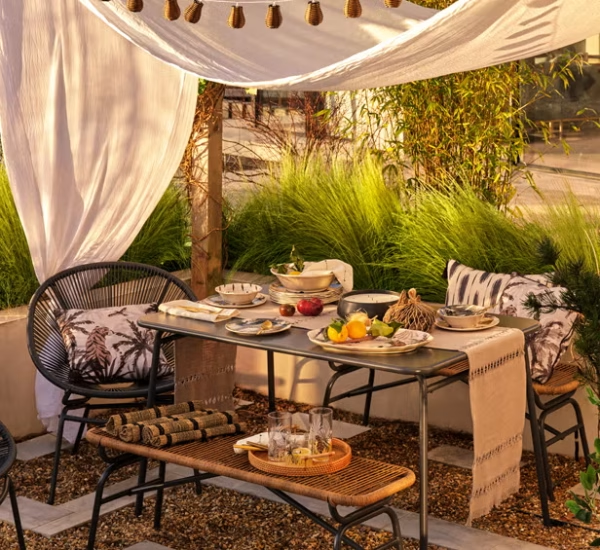
Comfort on a patio comes from scale first, style second. A wide chair with a low armrest beats a delicate accent seat almost every time. A deep bench with proper cushions earns its place. A sturdy dining table anchors the patio better than one that looks like it belongs on a balcony. Outdoor rooms need furniture that can visually hold the open air around them.
Pick Modern Patio Furniture That Has Weight and Simplicity
The strongest modern patio furniture has presence without fuss. Clean lines help, but structure matters more. Pieces should look planted, not temporary. Thin frames and undersized cushions often disappear outdoors because the setting is larger and brighter than most people expect. The eye needs something solid to land on.
This does not mean everything has to be blocky. It means the furniture needs confidence. A powder-coated metal frame, teak base, or woven lounge chair with real shape can carry a patio better than a dozen decorative touches. A lot of people buy for style shots and forget about posture, cushion depth, or arm height. Then the patio sits empty.
An outdoor living space works when the seating invites you to stay. That might mean one long sofa instead of four scattered chairs. It might mean adding a side table between every two seats so drinks have somewhere to go. Hospitality lives in those details.
Treat Shade as Part of the Design, Not an Add-On
Shade changes everything. Without it, even a good patio can become unusable for hours at a time. Yet too many people leave shade decisions until the end, as if an umbrella can solve every problem. It cannot.
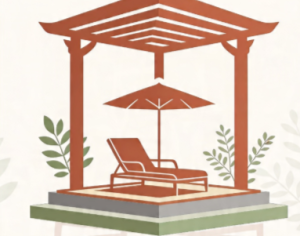
Permanent or semi-permanent shade usually reads better because it belongs to the design language of the home. A pergola can add frame and rhythm. A sail shade can work when the architecture is simple and the lines stay clean. A large cantilever umbrella can be effective, but only if its scale matches the furniture below it. Tiny umbrellas over wide lounge areas look defeated.
This is also the moment to be honest about sun direction. Afternoon glare can ruin an otherwise strong setup, especially on west-facing patios. Watch how the light moves before you spend money. The right shade makes the patio feel deliberate, and the wrong one makes it feel patched together.
Layer the Atmosphere So the Patio Feels Finished After Dark
The final difference between an average patio and a memorable one is atmosphere. People tend to spend money on furniture, then run out of energy for the details that give the space mood. That is backwards. A patio lives or dies on how it feels in the hour after sunset.
Atmosphere comes from restraint. Too many lanterns, too many colors, too many decorative accessories, and the space starts trying too hard. The better approach is to build depth through a few clear layers: light, planting, texture, and one or two pieces that give the patio personality.
Use Patio Lighting Ideas That Shape Mood, Not Glare
Good patio lighting ideas do not blast the whole area with brightness. They create pockets of warmth and leave room for shadow. That is what makes a patio feel calm rather than exposed. Soft wall lights, step lights, uplighting on a tree, or a small table lamp can do more than one harsh overhead fixture ever will.
A common mistake is relying on string lights alone. They can add charm, but they rarely solve the whole lighting problem. People still need to see the table, the path, and the edge of a step. Layered lighting works because each source has a role. One guides movement. Another supports conversation. Another gives the planting depth at night.
This is where backyard seating ideas and lighting should speak to each other. A built-in bench can glow with hidden underlighting. A reading chair can gain purpose from a nearby lamp. A dining area can feel intimate with low, warm light rather than blanket brightness.
Add Texture and Greenery With a Firm Hand
Plants soften a patio, but random planters do not create style. They create clutter. The best patios use greenery the way a good room uses textiles: to break up hard edges, add depth, and make the setting feel lived in without making it messy.
Large containers tend to work better than lots of small ones. They read as intentional, and they keep the eye from bouncing all over the place. Repeating one material for planters also helps. Black metal, warm terracotta, or cast concrete can all work, but mixing too many finishes usually weakens the look.
A patio also needs some roughness to avoid feeling sterile. That might come from weathered wood, textured stone, a handmade ceramic stool, or one piece of modern patio furniture with a woven finish that catches light differently through the day. The point is not to decorate harder. It is to edit harder.
The same rule applies to late-night ambience. The most effective patio lighting ideas are the ones that disappear into the feeling of the space. You notice the comfort, not the fixture itself. That is when a patio starts to feel complete.
A patio earns its value when it changes how you live at home, not when it looks impressive for one weekend. The best spaces do not chase trends or cram in features for the sake of showing off. They solve a daily need with enough style and discipline that stepping outside feels like a small reset.
That is why the strongest patio designs start with honesty. You need a layout that fits your habits, materials that age without becoming a burden, furniture that invites you to stay, and atmosphere that still works after the sun drops. Once those parts lock together, the patio stops feeling separate from the house. It becomes part of how the home breathes.
If you are planning a refresh, resist the urge to buy pieces in random bursts. Start with the floor plan, then make each decision earn its place. Measure the space, watch the light, define the main function, and build from there. Done well, a patio does more than improve curb appeal from the back yard. It gives you a better way to live in your home, one evening at a time.
Frequently Asked Questions
What are the best patio styles for modern homes?
Clean-lined patios with simple materials, wide walkways, and restrained color palettes tend to work best. Think concrete, large-format pavers, teak, black metal, and structured planting. The goal is a patio that feels calm and architectural rather than busy.
How do I make a small patio feel bigger and more useful?
Limit the number of furniture pieces and choose ones with clear purpose. Use one anchor feature, keep pathways open, and scale planters up instead of scattering many small items. A tighter layout with stronger choices always feels larger than a crowded one.
What type of patio flooring lasts the longest?
Poured concrete, quality pavers, brick, and natural stone all last well when installed correctly. The right choice depends on climate, maintenance tolerance, and the look you want. Durability comes from both the material and the groundwork beneath it.
How can I create shade on a patio without making it look bulky?
Use shade that matches the scale of the space. Pergolas, clean-lined umbrellas, and sail shades can all work when they feel tied to the home’s architecture. The best shade solutions look planned from the start instead of added out of panic.
What furniture works best for a modern patio setup?
Choose pieces with simple shapes, sturdy frames, and cushions that hold their form. Deep seating, solid dining tables, and side tables placed within reach make the patio more comfortable. Outdoor furniture should feel grounded enough to stand up to open-air settings.
How do I light a patio so it feels warm at night?
Layer the light instead of relying on one source. Mix low wall lights, table lamps, step lighting, or subtle uplighting in planting beds. Warm, focused light builds mood and helps people relax, while harsh brightness makes the patio feel exposed.
What are the biggest patio design mistakes homeowners make?
The biggest mistakes are buying furniture before planning the layout, ignoring sun direction, choosing undersized pieces, and treating décor as a substitute for function. A patio fails when it looks styled but does not support how people actually use it.
How often should I update or refresh my patio area?
Give the patio a quick review at the start of each warm season and a deeper refresh every few years. Cushions, lighting, planters, and layout tweaks can shift the whole feel without requiring a full rebuild. Small edits often create the biggest change.