
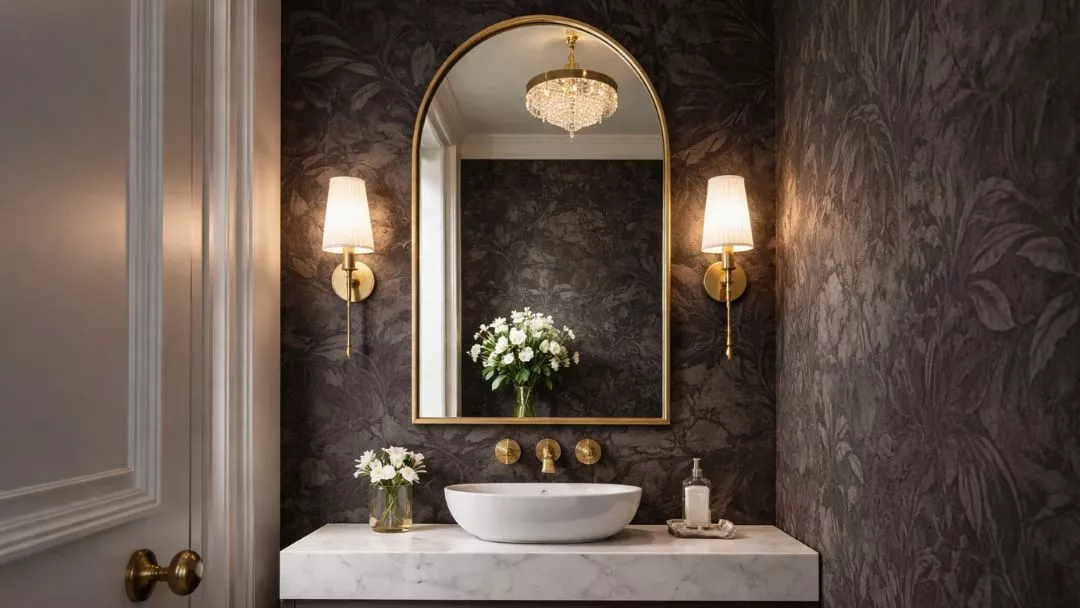
A tiny powder room can expose every weak design choice faster than any other room in the house. The good news is that a smart powder room vanity can make the whole space feel richer without turning a simple refresh into a contractor-heavy remodel. Many U.S. homeowners assume the vanity has to be replaced before the room can feel polished, but that is often where money gets wasted. The better move is to study the pieces people notice first: the finish, the faucet, the lighting, the counter, and the way the vanity sits in the room.
A small space rewards sharp decisions. One better mirror can do more than three random accessories. One warm metal faucet can make a builder-grade cabinet feel chosen instead of leftover. For homeowners comparing design ideas through home improvement publishing resources, the pattern is clear: budget does not create style, but restraint does. A powder room gives you the rare chance to spend less, edit harder, and still create a space guests remember.
Start With the Vanity Surface Before You Replace the Whole Piece
Most powder rooms do not need a full tear-out. They need a better first impression. The vanity surface sets that impression because it sits directly in the guest’s line of sight, often under the brightest light in the room. A worn top, dated hardware, or clumsy faucet can make the entire room feel tired even when the cabinet box still has years of life left.
How a New Countertop Changes the Room Fast
A small vanity top costs less to upgrade than a kitchen counter, yet the visual payoff can feel larger. In a half bath, there is no shower steam, no daily hair tools, and less heavy use than a full bathroom. That means you can choose a refined surface without worrying as much about constant abuse.
Quartz remnants are one of the best small bathroom vanity moves for American homeowners watching costs. Many local stone yards sell leftover slabs from larger jobs at lower prices, and a powder room usually needs only a small cut. A creamy white, soft gray, or honed-look surface can lift a plain base in one afternoon once the measurements are right.
Solid surface counters also deserve more respect than they get. They are easy to clean, smooth under the hand, and often cheaper than stone. The mistake is choosing a fake pattern that tries too hard. A calm, quiet top nearly always looks more expensive than a loud one pretending to be marble.
Why Paint Can Beat Replacement
Paint sounds too simple until you see the right shade on the right cabinet. A dated oak vanity can turn into a tailored piece with deep green, warm charcoal, muted navy, or mushroom beige. The trick is not the color alone. It is the prep.
A rushed paint job looks cheap because edges chip, brush marks show, and doors stick. Sanding, priming, and using enamel paint made for cabinets creates the difference between a weekend patch and a finish that feels built in. This is where patience saves more money than a sale price ever could.
A homeowner in Ohio with a basic 24-inch vanity might spend far less painting the base, changing the pulls, and adding a stone remnant than buying a new cabinet of similar quality. That is the counterintuitive part: keeping the old box can look better than replacing it with a flimsy new one from the bargain aisle.
Make Powder Room Vanity Upgrades Feel Custom Through Details
Once the main surface feels intentional, the next layer is detail. This is where budget bathroom upgrades either start looking smart or start looking scattered. A powder room has no room for visual noise. Every knob, edge, and fixture has to earn its place because there is nowhere for weak choices to hide.
What Hardware Finishes Make a Small Vanity Look Rich?
Cabinet hardware is tiny, but it controls the mood of the vanity. Thin chrome pulls can make a cabinet feel dated, while weightier knobs or handles can add a furniture-like feel. Brass, matte black, polished nickel, and oil-rubbed bronze can all work, but the finish has to match the room’s attitude.
Warm brass feels classic against navy, green, cream, or walnut tones. Matte black works well in modern farmhouse homes and newer suburban builds, but it can feel flat if every other finish is also black. Polished nickel gives a softer shine than chrome and often reads more expensive under warm lighting.
Scale matters as much as finish. A tiny knob on a wide vanity door can look nervous. A larger pull with clean lines gives the cabinet more confidence. Spend a few extra dollars on hardware that feels heavy in the hand. Guests may never say they noticed it, but the room will feel better because of it.
Why Faucet Shape Matters More Than Price
A faucet does not need to be expensive to look good. It needs the right shape. Tall, curved faucets often feel more graceful than short builder-grade ones, especially when paired with a shallow sink. A single-handle design can keep the counter cleaner in a narrow room.
The wrong faucet can ruin good powder room ideas because it fights the sink or crowds the backsplash. A spout that is too short causes splashing. A faucet that is too tall can look awkward on a tiny vanity. Good design sits in proportion, not price.
For a 30-inch vanity in a small Dallas powder room, a brushed brass faucet with a simple arc can change the whole mood. Pair it with matching hardware, but avoid making every metal in the room identical. A little tension between finishes can feel collected. Too much matching can feel like a showroom packet.
Use Light, Mirror, and Wall Color to Stretch the Vanity Zone
A vanity never stands alone. The wall behind it, the mirror above it, and the light around it decide whether the upgrade feels finished. Many homeowners spend most of the budget on the cabinet, then leave the old mirror and harsh light in place. That choice cuts the room off at the knees.
How the Right Mirror Adds Height and Shape
A plain builder mirror can make a powder room feel flat because it has no edge, no shape, and no sense of style. Replacing it with a framed mirror brings instant structure. Round mirrors soften tight rooms. Arched mirrors add height. Rectangular mirrors with slim frames feel clean and classic.
The mirror should relate to the vanity without copying its width exactly. A mirror that is slightly narrower than the vanity often looks more designed. One that is too small feels like an afterthought. One that is too wide can crowd the walls and make the room feel pinched.
A framed mirror is one of the easiest ways to create a luxury bathroom look without touching plumbing. In a narrow New Jersey half bath, an arched brass mirror over a painted vanity can make the room feel taller before anyone notices the square footage. Shape can do quiet work.
Why Lighting Can Save a Budget Vanity
Bad lighting makes good finishes look dull. A single harsh bulb above the mirror can throw shadows, flatten paint color, and make metal finishes look cheap. Better lighting gives the vanity depth, especially in a windowless powder room.
Sconces on both sides of the mirror usually feel richer than one bar light above it, but wiring can raise the cost. When side sconces are not realistic, choose a clean overhead vanity light with warm bulbs and a finish that relates to the faucet or mirror. Warm white light tends to flatter paint, skin tones, and stone better than cold blue light.
Wall color also plays a role. Deep paint can make a powder room feel intimate, not smaller, when the lighting is right. Pale colors can work too, but they need texture or contrast. A soft taupe wall behind a dark vanity can feel calmer than bright white walls that expose every seam and shadow.
Add Storage and Styling Without Making the Room Feel Packed
Small powder rooms fail when every surface tries to be useful and decorative at the same time. A vanity can support storage, style, and comfort, but not if the room gets crowded with baskets, trays, signs, jars, and extra towels. Editing is not the boring part. It is the design.
Which Storage Choices Keep a Small Vanity Clean?
Closed storage almost always beats open storage in a powder room. Guests do not need to see cleaning sprays, extra rolls, or spare soap bottles. A vanity with doors or drawers keeps the room calm because the mess has somewhere to go.
If the vanity has open shelving, use one basket at most and keep it plain. Rolled towels can look nice in photos, but in real homes they often become dusty props. A closed basket for toilet paper or hand towels works better than a shelf full of display items.
This is where small bathroom vanity planning should stay honest. A powder room needs hand soap, a towel, tissue, spare paper, and maybe one scent element. That is it. When storage supports those needs without showing every item, the room feels cleaner and more expensive.
How to Style the Vanity Without Looking Overdone
Styling should feel like the final five percent, not the whole design plan. A good soap dispenser, one small tray, and a fresh hand towel can be enough. Add a small vase or branch if the counter has space, but leave breathing room around the sink.
Scent can help, but it should not announce itself from the hallway. A mild diffuser or candle works better than heavy sprays. Powder rooms are small, and strong fragrance can turn a nice space into a headache.
A luxury bathroom look often comes from what you remove. Skip word art, fake crystal jars, and crowded trays. Let the vanity finish, faucet, mirror, and lighting carry the room. The result feels grown-up because it is not begging for attention.
Choose Materials That Handle Real Guest Use
A powder room may be small, but it still has to work. Guests wash hands, kids splash water, and someone will set a wet ring on the counter during a party. Pretty finishes that cannot handle basic use become expensive mistakes, even when the upfront cost looks friendly.
What Finishes Hold Up Best in Busy Homes?
Satin or semi-gloss cabinet paint handles fingerprints better than flat paint. Quartz handles splashes better than many natural stones. Ceramic sinks stay dependable and easy to clean. These choices may not sound dramatic, but they keep the room looking fresh after the first month.
Wood vanities can look rich, especially in warm walnut or oak tones, but they need a good finish around water. Cheap veneer near a sink can swell when moisture sneaks into the edges. Always check how the cabinet is built, not only how it looks in a product photo.
Families with kids should think twice before choosing fragile vessel sinks or high-maintenance stone. A powder room near the kitchen or living room often gets heavy use during gatherings. Durable choices do not kill style. They protect it.
Why Proportion Matters in Small-Budget Design
A beautiful vanity can still be wrong if it blocks movement. Powder rooms need clear space around the toilet, door swing, and sink. A vanity that is too deep can make guests turn sideways to wash their hands. That feels cramped, no matter how nice the finish is.
Floating vanities can help in tight rooms because visible floor space makes the room feel lighter. Pedestal sinks save space, but they sacrifice storage. A narrow cabinet with a slim counter often gives the best balance for older U.S. homes where half baths were squeezed into hallways or under stairs.
One Boston homeowner might gain more from a 19-inch-deep vanity than from a fancy 22-inch model. Those few inches change how the room feels when the door closes. Comfort is part of beauty, even when nobody calls it that.
Conclusion
Small rooms do not forgive lazy choices, but they reward smart ones faster than any large remodel. A powder room can feel polished with a painted cabinet, better hardware, a graceful faucet, warm lighting, and a mirror that adds shape instead of bulk. The secret is not spending like the room is a spa. It is choosing each piece as if the space has no room for filler.
The best powder room vanity upgrades respect scale, durability, and mood at the same time. They do not chase every trend or copy every showroom wall. They focus on the few details guests actually see and touch. That is where a modest budget starts to feel intentional.
Start with the weakest visual point in your current space and fix that first. Change the surface, the faucet, the mirror, or the lighting before you assume the whole vanity has to go. A small room can make a big promise when every inch is asked to matter.
Frequently Asked Questions
What are the best budget bathroom upgrades for a powder room vanity?
Paint the cabinet, replace the faucet, add better hardware, and upgrade the mirror first. These changes affect what guests notice right away. A new countertop can also help if the existing surface looks stained, dated, or out of step with the room.
How can I make a small bathroom vanity look more expensive?
Choose heavier hardware, a clean faucet shape, warm lighting, and a framed mirror. Keep the counter clear except for soap, a towel, and one small accent. Expensive-looking rooms usually come from restraint, not from adding more pieces.
Is it cheaper to paint or replace a powder room vanity?
Painting is usually cheaper when the cabinet box is still solid. Replacement makes sense if the vanity has water damage, poor layout, broken doors, or cheap construction. Good prep matters because a sloppy paint job can make the room look worse.
What color works best for powder room ideas on a small budget?
Deep green, navy, charcoal, taupe, cream, and warm beige all work well. The best color depends on the floor, wall tone, and lighting. Rich cabinet colors often make a low-cost vanity feel more like furniture.
Should a powder room vanity have drawers or doors?
Drawers are easier for small items like soap, towels, and tissue, while doors work better for taller supplies. A mix is ideal, but many compact vanities offer one or the other. Closed storage keeps the room calmer than open shelves.
What faucet finish gives a luxury bathroom look for less?
Brushed brass, polished nickel, matte black, and oil-rubbed bronze can all look high-end when paired well. The shape and weight of the faucet matter more than the finish alone. Avoid flimsy fixtures with awkward proportions.
Can I upgrade a powder room vanity without changing plumbing?
Yes, many strong upgrades do not touch plumbing. Paint, hardware, mirror, lighting, wall color, and styling can change the room without moving pipes. Even a faucet swap usually stays simple when the sink layout remains the same.
How do I keep a small powder room from feeling cluttered?
Use closed storage, limit counter decor, and avoid oversized accessories. Keep only hand soap, a towel, and one small accent visible. A clean vanity area makes the room feel larger, calmer, and more finished.