A patio rarely feels elegant because of one expensive purchase. It feels elegant when every choice seems to belong to the same calm idea. That is why Patio Inspiration matters more than trend-chasing, bigger budgets, or filling every empty corner with another chair, pot, or lantern.
You can spot the difference fast. One outdoor space looks busy, showroom-perfect, and oddly cold. Another feels effortless, even when the furniture is simple and the footprint is modest. The second one wins because it understands mood before merchandise. It gives your eye a place to land, your body a reason to stay, and the evening a shape that feels intentional. If you care about a more refined look, studying smart outdoor styling insights can help you see how small design moves change the whole atmosphere.
The mistake most people make is treating the patio as leftover square footage. They decorate it last, mix too many materials, and hope cushions will smooth it out. They will not. A polished outdoor space comes from restraint, rhythm, and a few decisions made with conviction. When you get those right, your patio stops feeling like an extension of the yard and starts feeling like the best room you own.
Start With Atmosphere Before You Buy Anything
The fastest way to ruin a patio is to shop before you decide how you want the space to feel. Furniture catalogs tempt you into thinking style begins with objects. It does not. It begins with mood, pace, and how you want people to move through the area once the sun drops and the conversation gets better.
Read the Space the Way a Guest Would
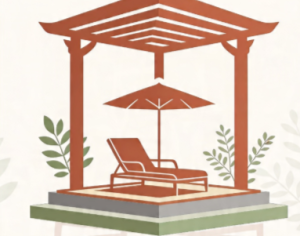
The first strong patio decisions happen before a single item arrives. Stand at the door and notice what your eye meets first. That first view should not be a pile of mismatched chairs or a grill cover fighting for attention. It should be one controlled scene that signals ease. A slim dining set under a pergola, a bench against greenery, or a low conversation group around a stone table can each do the job. The point is not scale. The point is clarity.
Small patios benefit from this discipline even more than large ones. When space is limited, every object starts arguing with the next one. That is why an outdoor seating layout should never begin with the question, “How many people can I fit?” Start with, “Where does the conversation want to happen?” A four-seat arrangement with breathing room feels richer than a six-seat squeeze that makes everyone conscious of elbows and exits.
Distance changes comfort. Seats placed too far apart turn good company into raised voices. Seats placed too close feel cramped by the second drink. Most refined patios land in that middle ground where people can lean in without feeling pinned. It sounds minor. It is not. Elegant spaces always understand human behavior before they think about style.
Build One Visual Anchor and Let It Lead
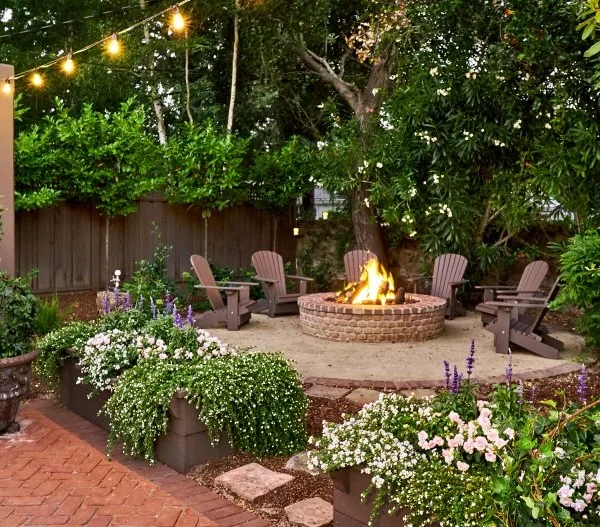
A patio needs a center of gravity. Without one, the whole area feels undecided. Your anchor can be a fire table, a tiled planter, a sculptural olive tree, or a long outdoor dining table with real presence. What matters is that one feature quietly leads the composition instead of competing with five others.
This is where many attempts at elegant outdoor decor go off course. People assume elegance comes from adding more refined pieces. In practice, elegance usually comes from removing one loud distraction and allowing one strong element to take command. A black metal table against pale stone. A deep wood bench against white render. One oversized planter instead of a cluster of small ones. Fewer moves. Better result.
Anchors also help you edit color. Once you know what the space revolves around, every other material can support it instead of improvising its own mood. That could mean sandy upholstery around a charcoal table, or warm terracotta accents around pale limestone pavers. The most memorable patios look composed because they choose a lane and stay in it.
When you begin with atmosphere, you stop buying random fixes. That matters, because the next layer is where the space either grows depth or slips into clutter.
Choose Pieces That Look Polished and Live Well Outdoors
Once the mood is clear, materials start to matter more than labels. A patio does not feel refined because the furniture came from a high-end shop. It feels refined when every surface wears well, ages honestly, and keeps its shape under real weather, real use, and the occasional careless guest dragging a chair the wrong way.
Make the Seating Arrangement Feel Natural, Not Formal
The best outdoor seating layout never feels like it was measured by fear. It feels loose enough for people to settle in, yet structured enough to hold the space together. That balance usually comes from mixing one larger grounding piece with lighter companions. A sofa with two airy lounge chairs will feel more relaxed than four identical seats locked in military symmetry.
This is where comfort becomes visual. Deep cushions, lower tables, and slightly angled chairs tell people the patio is meant for staying. Rigid upright seating sends the opposite message. That might suit a quick coffee. It rarely suits an evening. If you want the space to earn its keep after dark, the arrangement has to invite a second hour without asking permission.
Shape matters as much as softness. Curves can rescue an outdoor area from feeling flat and overbuilt. A rounded coffee table, a tub chair, or a circular side table introduces movement where straight lines tend to harden the mood. One curved note is often enough. More than that, and the space can start feeling themed.
Furniture scale also tells the truth fast. A tiny rug under chunky furniture makes the whole setup look apologetic. A large enough foundation piece gives everything authority. The same rule applies to planters and side tables. Undersized pieces rarely read as elegant. They read as temporary.
Use Fabrics and Surfaces That Quietly Do the Heavy Lifting
Texture does more work outdoors than many people realize. It softens edges, warms hard materials, and makes a patio feel inhabited rather than staged. But softness has to survive weather, which is why weatherproof patio textiles deserve more respect than they usually get. They are not minor accessories. They are part of the structure of comfort.
The smartest fabric choices do not scream performance. They look tailored, matte, and tactile. Think woven neutrals, washed stripes, nubby solids, and earth-toned throws that feel collected instead of matched. Glossy synthetic finishes often flatten the whole composition. They may survive the season, but they rarely improve the room.
Good weatherproof patio textiles also help you control temperature in a visual way. Light fabrics cool the eye in hot climates. Richer taupes, clay tones, and muted olives make a patio feel grounded when the setting is windy or exposed. You do not need loud pattern to create interest. You need layering that rewards a second glance.
Durability should guide the invisible choices too. Powder-coated metal, sealed wood, outdoor-rated rugs, and stone that hides dust better than polished tile all help the space stay attractive between deep cleans. A patio that looks good only on the day you style it is not elegant. It is exhausting.
Once the furniture and fabrics carry their share, the patio starts to feel resolved in daylight. But daylight is only half the story. The real test begins when the sun leaves.
Light Decides Whether the Patio Feels Flat or Luxurious
Many outdoor spaces look passable at noon and lifeless at night. That is not a furniture problem. It is a lighting failure. If you want the patio to feel intimate, expensive, and memorable after sunset, you have to stop treating lighting like an accessory and start treating it like architecture.
Shape the Evening With Layered Light
The most effective patio lighting ideas do not flood the entire area. They guide attention. They make faces readable, surfaces warm, and corners softer without exposing every inch of paving. Overlighting kills atmosphere because it leaves nothing to discover. A patio should glow, not glare.
Start with one practical layer. That may be a wall sconce near the door, a pendant above a dining table, or a slim overhead fixture under a covered roof. Then add a lower, warmer layer closer to the body. Table lamps made for outdoor use do this better than many people expect. They make the setting feel less like a yard and more like a room with a sky above it.
The best patio lighting ideas also understand contrast. A path light near planting, a lantern beside a bench, or a wash of light on a textured wall creates depth by leaving other areas dimmer. That contrast is where mood lives. Uniform brightness is the enemy of seduction.
Color temperature matters too. Cooler light tends to flatten skin and sharpen hard surfaces in an unforgiving way. Warmer light is kinder, calmer, and more flattering to wood, stone, and woven fabrics. If the patio feels harsh after dark, the issue is often not design at all. It is the wrong kind of bulb.
Add Fire, Reflection, and Shadow With Restraint
Outdoor elegance gets stronger when light sources vary in character. Electric light gives control. Candlelight gives movement. Fire gives gravity. You do not need all three in abundance, but one note from each family can make the patio feel alive. A pair of storm lanterns on the table, a low fire bowl, and one discreet uplight on a tree can transform an ordinary setup into something people remember.
This is where Patio Inspiration stops being a mood board term and becomes practical judgment. You begin noticing that the richest patios are not always the most decorated ones. They are the ones where shadow has been allowed to stay. That shadow frames the glow, sharpens silhouettes, and makes the space feel deeper than it is.
Reflection adds another subtle layer. Glazed ceramic, a dark window, a metal tray, or a bowl of water catching light can make the patio flicker without looking busy. Used once or twice, it feels deliberate. Used everywhere, it feels restless. The rule is simple: when one reflective surface is working, let it work alone.
Night also reveals what daylight forgives. Messy cords, bulky plastic fixtures, and lights placed at odd heights break the spell fast. If you want the patio to feel composed, hide what should disappear and highlight what earns attention. That single habit separates thoughtful design from weekend improvisation.
Once the evening mood is set, one final challenge remains. You have to keep the patio finished without overfilling it.
Finish the Space With Restraint, Not Decoration Anxiety
People often ruin a good patio in the last ten percent. They sense a little emptiness, panic, and start adding trays, signs, pillows, trinkets, fake vines, and ornamental clutter that steals all the calm they worked to build. The fix is not more styling. The fix is better editing.
Keep the Palette Narrow and the Materials Honest
Strong patios rarely rely on endless variety. They rely on a narrow material story repeated with enough discipline to feel composed. Wood and linen-toned fabric. Black metal and stone. Terracotta and olive green. That kind of repetition is what gives elegant outdoor decor its calm authority.
Too many patios fail because they try to impress with accumulation. The result feels busy before anyone sits down. A cleaner palette gives your better pieces room to breathe. It also makes seasonal changes easier, because you can shift mood with one or two textiles, one planter swap, or a new table surface instead of rebuilding the whole space.
Contrast still matters. A patio in all beige can feel sleepy. A patio in all dark tones can feel severe. The best answer is tension with control: rough beside smooth, pale beside deep, matte beside glazed. A travertine planter next to black steel. A timber table against crisp upholstery. That tension creates interest without noise.
Plants should follow the same logic. One architectural tree, one trailing element, and one mass of softer foliage often do more than a dozen scattered pots. Outdoor areas look expensive when planting feels edited, not inherited from a clearance rack.
Refresh the Space Seasonally Without Starting Over
The smartest patio owners do not redecorate from scratch every season. They make selective edits. That is cheaper, calmer, and far more convincing. Swap cushion covers, change the table styling, trim back overcrowded plants, and bring in one object with presence. That could be a new lantern, a larger planter, or a heavier throw when evenings cool down.
Seasonal updates also keep the patio emotionally current. Summer wants openness, lighter fabrics, citrus tones, and freer surfaces. Autumn can handle deeper clay, olive, charcoal, and more tactile layers. The structure of the patio should stay consistent while the mood shifts around it. That is how a space keeps its identity.
This is another place where people misunderstand weatherproof patio textiles. They think performance fabrics must stay outside unchanged all year to justify the purchase. Not true. Rotating pieces protects them, sharpens the look, and gives the patio a fresh pulse without inviting chaos.
You should also leave something unresolved. That sounds wrong, but it works. A patio with one intentionally open corner, one uncluttered ledge, or one quiet stretch of wall feels more sophisticated than a space where every surface has been forced to perform. Rooms, indoors or out, need a little silence.
By the time you reach this stage, the patio should feel less like a decorating project and more like a place with its own temperament. That is the threshold most people miss, and it is the one that changes everything.
A refined patio is never the result of copying a photo piece by piece. It comes from deciding how you want the space to behave, editing with discipline, and allowing materials, light, and proportion to do their work. The strongest versions of Patio Inspiration are not flashy. They are calm, intentional, and comfortable enough that people stop noticing the design and start enjoying the night.
That is the standard worth chasing. Pick one mood, tighten your palette, improve your lighting, and remove anything that makes the space feel louder than it needs to be. Then sit outside after sunset and notice what still feels off. That final quiet edit is usually where elegance appears. Start there, trust your eye, and make the patio a place people hesitate to leave.
Frequently Asked Questions
How do you make a patio look elegant on a modest budget?
Focus on proportion, lighting, and editing before you spend on statement pieces. A restrained palette, one strong anchor item, and better cushions will usually outperform a pile of cheap accessories. The goal is control, not quantity.
What colors work best for elegant outdoor decor?
Muted neutrals, warm earth tones, charcoal, olive, and soft stone shades tend to work best. They age well, flatter natural materials, and create a calmer backdrop than bright colors that fight for attention across the space.
What are the best patio lighting ideas for evening entertaining?
Layered warm lighting works best. Use one practical source, one low lamp or lantern layer, and one accent light near plants or texture. That mix gives the patio depth and mood without making it feel overlit or exposed.
How should an outdoor seating layout be arranged for conversation?
Keep seats close enough for easy talking and angle them toward a shared focal point like a table, fire bowl, or planter. Avoid pushing furniture to the edges, because that makes the center feel empty and the whole setup feel disconnected.
Which weatherproof patio textiles look the most refined?
Choose matte woven fabrics, quiet stripes, textured solids, and tones drawn from stone, wood, and planting. Avoid shiny finishes and loud patterns unless the rest of the patio is intentionally plain enough to support them.
How many accessories should a stylish patio have?
Less than most people think. Start with a rug, a few cushions, lighting, and one or two planters with presence. After that, add only what improves comfort or atmosphere. Decorative filler usually weakens the result.
What is the biggest mistake people make with patio styling?
They buy too much before deciding on a mood. That creates a space full of isolated pieces instead of one clear atmosphere. A patio becomes memorable when every choice supports the same visual and emotional direction.
Can a small patio still feel luxurious and inviting?
Yes, and small patios often feel better when styled well because they force discipline. Strong lighting, fewer larger pieces, controlled planting, and an intentional layout can make a compact space feel richer than a sprawling, unfocused one.