
A poorly insulated house does not feel broken at first. It feels slightly drafty, a little uneven, and oddly expensive every time the utility bill arrives. That is why insulation types compared side by side matter for real U.S. homes, not only for contractors or energy auditors. The material you choose behind drywall, under flooring, or across attic joists decides how your house holds heat, blocks summer air, handles moisture, and stays livable through hard weather. A homeowner in Minnesota, Arizona, Georgia, or Maine is not solving the same problem, even when the product label looks the same at the store. Good insulation planning also connects to broader home improvement decisions, from remodeling budgets to local contractor research through trusted home service insights. The mistake is thinking insulation is one product with different prices. It is closer to choosing the right coat, shoes, and rain gear for three different parts of the same body.
Choosing the Right Material Starts With the Building Part
The best insulation choice begins with where the material has to work. Walls, floors, and attics face different pressure, moisture, framing, and access issues. A product that performs well above a ceiling may be a clumsy fit inside a tight wall cavity, and a material that looks neat under a floor may fail fast if crawl space moisture reaches it.
Wall insulation options that protect comfort without stealing space
Wall cavities leave little room for guesswork. Most American homes have framed walls with studs, wiring, outlets, pipes, and narrow bays that limit how much insulation can fit. Fiberglass batts remain common because they are affordable and easy to place during open-wall work, but they punish sloppy installation. A small gap around an outlet box can turn a neat wall into a quiet air leak.
Dense-pack cellulose often works better for older homes where the drywall or plaster stays in place. Crews can drill access holes and fill wall cavities with recycled fiber that settles into odd spaces. That matters in older U.S. houses with balloon framing, uneven stud bays, or past remodeling work that left hidden voids.
Good wall insulation options should match the wall’s age, depth, and air-sealing plan. Spray foam can help in tricky rim joists or small gaps, but using it across every wall is not always the smartest move. Sometimes the better job is careful air sealing plus properly fitted batts, because walls need control more than drama.
Home insulation R-value numbers only matter when they match the room
R-value tells you how much a material resists heat flow, but the number does not work alone. A high rating on paper can lose its edge when insulation is compressed, cut poorly, or placed in a damp cavity. That is why two homes with the same labeled rating can feel nothing alike in January.
The U.S. climate zone matters here. A house near Buffalo needs a different wall and attic strategy than one outside Phoenix, even when both owners buy from the same big-box aisle. The U.S. Department of Energy insulation guide is a useful reference because it ties insulation levels to location instead of treating the country like one weather map.
A smart home insulation R-value plan also respects the weak spots around the insulation. Heat will chase the easiest path through framing, gaps, recessed lights, and unsealed top plates. The label gives you a rating, but the house gives you the truth.
Attic Materials Have to Control Heat Before It Reaches the Rooms
Once the walls are understood, the attic becomes the place where many homes win or lose the comfort battle. Heat rises in winter and attic heat radiates downward in summer, so the space above your ceiling can quietly shape the feel of every room below. Attics are rarely beautiful, but they are honest. They expose every shortcut.
Attic insulation materials that handle air movement before thickness
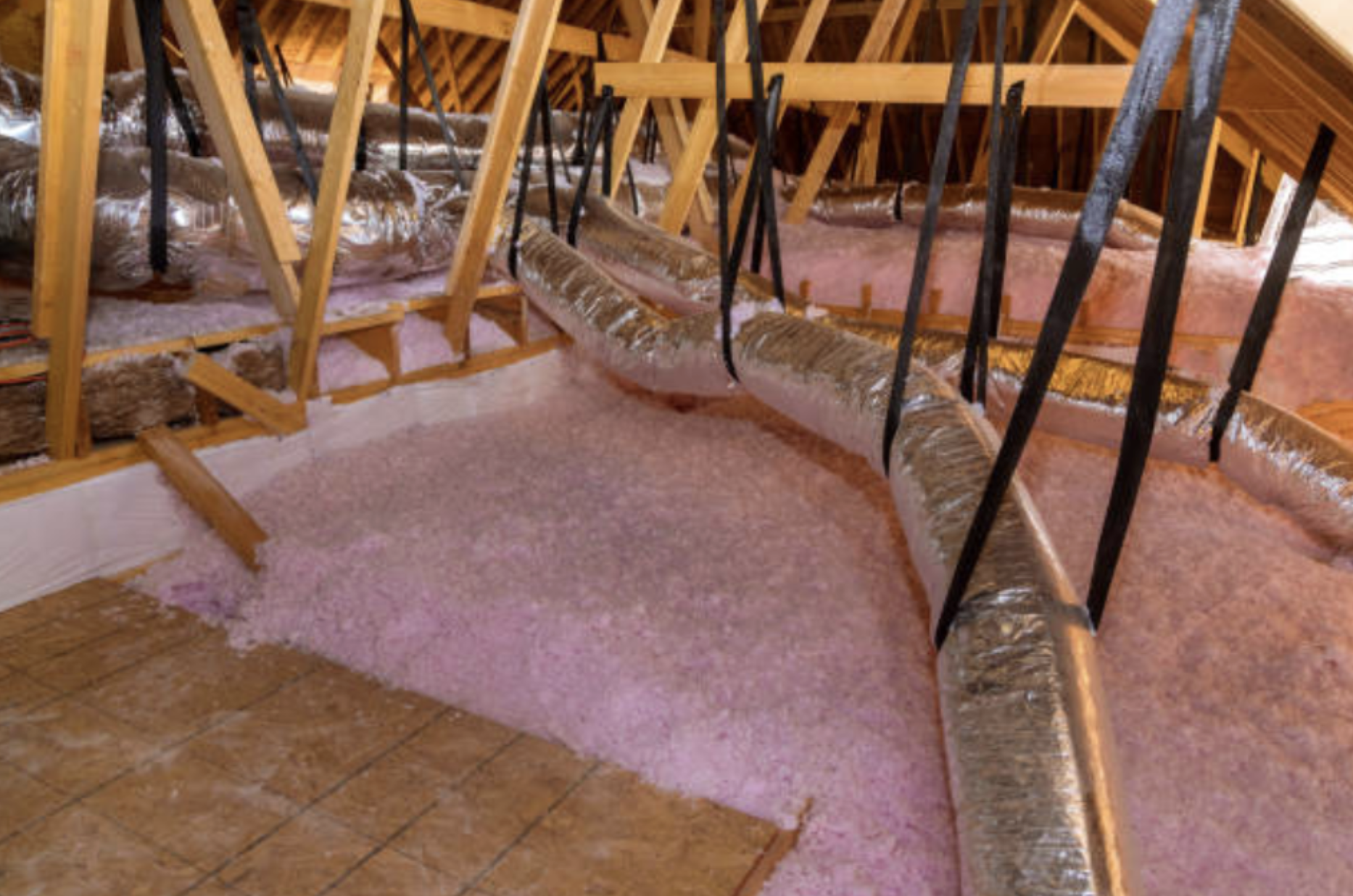
Loose-fill fiberglass and cellulose are common in attic spaces because they cover large areas with fewer seams than batts. That matters because attic floors are full of small interruptions: wiring, framing changes, bath fans, plumbing vents, and old ceiling penetrations. A flat blanket may look tidy, but loose-fill material often surrounds those obstacles with less fuss.
Cellulose tends to pack well around irregular spaces, while blown fiberglass resists moisture absorption and stays light. Mineral wool has strong fire resistance and holds shape well, though cost can climb. The right choice depends on your attic’s current condition, not on which bag has the loudest claims printed across the front.
Attic insulation materials cannot fix air leaks by thickness alone. If warm indoor air escapes through ceiling gaps, it can carry moisture into a cold attic and create trouble near roof decking. Air sealing before adding depth is the dull step people skip, and it is often the step that saves the job.
Why blown-in coverage beats tidy-looking gaps
Batts look clean in photos, but attics are not photo studios. They are full of joists, wires, low-slope corners, and spots where a person can barely crawl without crushing something. Blown-in insulation handles that mess with more patience because it can spread across uneven areas and fill around small obstructions.
A ranch home in Ohio with thin attic coverage may gain more comfort from adding loose-fill material than from replacing every old batt. The job may not look dramatic after the hatch closes, but the rooms below can feel calmer. Fewer cold ceilings. Less summer heat pressing down at dinner time.
The catch is ventilation. More insulation should not block soffit airflow, and baffles often need to protect the path from eaves to ridge or roof vents. Attic work fails when someone treats insulation like snow and piles it everywhere without thinking about how the roof breathes.
Floor Insulation Methods for Cold Rooms and Crawl Spaces
A cold floor changes how a room feels before the thermostat even reacts. You notice it in a kitchen over a crawl space, a bonus room above a garage, or a bedroom built over an unconditioned area. Floor insulation is not only about warmth underfoot. It is about blocking air movement, moisture, and temperature swings from below.
Floor insulation methods that stop drafts before they reach your feet
Floor cavities often need insulation that stays in contact with the subfloor. If batts sag away from the floor above, cold air can move through the empty gap and steal most of the comfort benefit. This is why wire supports, netting, or rigid backing can matter as much as the insulation itself.
Fiberglass batts can work under floors when installed with care and protected from wind washing. Rigid foam can help along rim joists or crawl space walls, especially when the crawl space becomes part of the conditioned boundary. Spray foam may solve awkward edges, but it also raises cost and makes future repairs harder to see.
Reliable floor insulation methods start with deciding where the thermal boundary belongs. In some crawl spaces, insulating the floor above makes sense. In others, sealing and insulating the crawl space walls creates a cleaner, drier, more stable space under the home.
Why moisture decides more than comfort in lower levels
Crawl spaces and basements do not forgive wishful thinking. Damp air, exposed soil, plumbing leaks, and poor drainage can turn the wrong insulation into a sponge, a nesting zone, or a hidden mold risk. Comfort matters, but moisture gets the first vote.
A home in coastal South Carolina may need a different floor plan than one in dry Colorado. In a humid crawl space, a vapor barrier over exposed soil and sealed foundation vents may matter before any new insulation goes in. In a cold northern basement, rim joist sealing may deliver the strongest comfort change.
The quiet truth is that lower-level insulation should be chosen like building armor, not like pillow stuffing. If the material cannot handle the environment around it, the R-value becomes a nice number attached to a bad decision.
Comparing Cost, Lifespan, and Installation Risk Before You Buy
Material price gets too much attention because it is easy to compare. The harder question is what the installed system will cost after labor, prep, mistakes, and long-term performance enter the room. Cheap insulation placed badly is expensive insulation wearing a discount tag.
When cheap batts make sense and when they waste money
Fiberglass batts still deserve respect. They are widely available, budget-friendly, and effective in open framing when someone cuts them carefully around wires, pipes, and boxes. A garage wall retrofit or basement partition wall can be a perfect match when the cavities are exposed and dry.
The waste begins when batts get shoved into awkward spaces, compressed behind pipes, or left with gaps at the edges. Insulation does not work better because more material is forced into the bay. Compression lowers performance and creates the false comfort of a finished job.
A homeowner finishing a small workshop might be better off spending money on air sealing, neat batt work, and drywall than chasing a premium product. The highest-priced material is not automatically the grown-up choice. The grown-up choice is the one that fits the problem without creating three new ones.
What a practical upgrade path looks like for a U.S. home
A practical insulation plan starts with the easiest leaks first. Seal attic penetrations, weatherstrip the attic hatch, address rim joists, check crawl space moisture, and then add insulation where the house proves it needs help. This order is less exciting than buying stacks of material, but it works.
Older homes often need staged upgrades. You might add attic depth this year, handle crawl space sealing next year, and save wall work for a future siding or interior remodel. That approach keeps the budget sane and avoids tearing into finished surfaces for a small gain.
Related internal resources can help homeowners move in a clean order, especially guides on attic hatch insulation and crawl space door replacement. Those projects sound small, but they often support the bigger insulation plan because they close the gaps that expensive material cannot fix on its own.
Conclusion
A well-insulated home is not built from one magic product. It is built from choices that respect location, weather, framing, moisture, and access. The smartest homeowners stop asking which material is best and start asking where each material has the right to perform. That shift changes the entire project.
Insulation types compared with real rooms in mind show a clear pattern: attics need coverage and air sealing, walls need careful fit, and floors need moisture control before comfort promises mean anything. Price still matters, but it should never lead the decision alone. A lower-cost material installed with care can beat a premium product installed with blind confidence.
Walk your home from top to bottom before buying anything. Check the attic, touch the floors, look at crawl space conditions, and note where rooms feel uneven. Then choose the upgrade that solves the biggest weakness first, because comfort is won by fixing the house you have, not the one the product label imagines.
Frequently Asked Questions
What is the best insulation type for attic spaces in cold climates?
Loose-fill cellulose or fiberglass often works well because it covers wide attic floors and fills around framing. Cold climates also need strong air sealing before extra depth goes in. Without sealing ceiling leaks first, warm indoor air can escape into the attic and cause moisture trouble.
Which insulation works best inside existing walls?
Dense-pack cellulose is often a strong choice for existing walls because installers can fill cavities through small access holes. It handles uneven older framing better than standard batts. Spray foam may help in select trouble spots, but full-wall use can raise cost fast.
How do I compare insulation for walls and floors?
Walls usually need tight cavity fit and air control, while floors need support, draft blocking, and moisture protection. A wall product can fail under a floor if it sags or faces damp air. The location should guide the material before price does.
Is spray foam insulation worth the extra cost?
Spray foam can be worth it for rim joists, tight gaps, and areas where air sealing is hard with other materials. It is less appealing when cheaper materials can perform well with careful prep. The decision should depend on access, moisture, future repairs, and budget.
What insulation should I use in a crawl space?
Crawl spaces often need moisture control before insulation. Many homes benefit from a ground vapor barrier, sealed air leaks, and insulation on crawl space walls or floor cavities. The right approach depends on whether the crawl space is vented, damp, dry, conditioned, or unconditioned.
Does higher R-value always mean better insulation performance?
Higher R-value helps only when the material is installed correctly and stays dry. Gaps, compression, air leaks, and moisture can lower real performance. A moderate R-value with careful air sealing can outperform a higher-rated product placed poorly.
Can I add new insulation over old attic insulation?
New insulation can often go over old attic insulation if the old material is dry, clean, and not moldy or pest-damaged. Air sealing should happen first. Any blocked vents, recessed light hazards, or moisture problems need correction before adding more depth.
How often should home insulation be checked?
A quick inspection every few years is smart, especially in attics, crawl spaces, and rooms with comfort problems. Check sooner after roof leaks, pest issues, remodeling, or high energy bills. Insulation lasts longer when moisture, air leaks, and disturbance stay under control.