
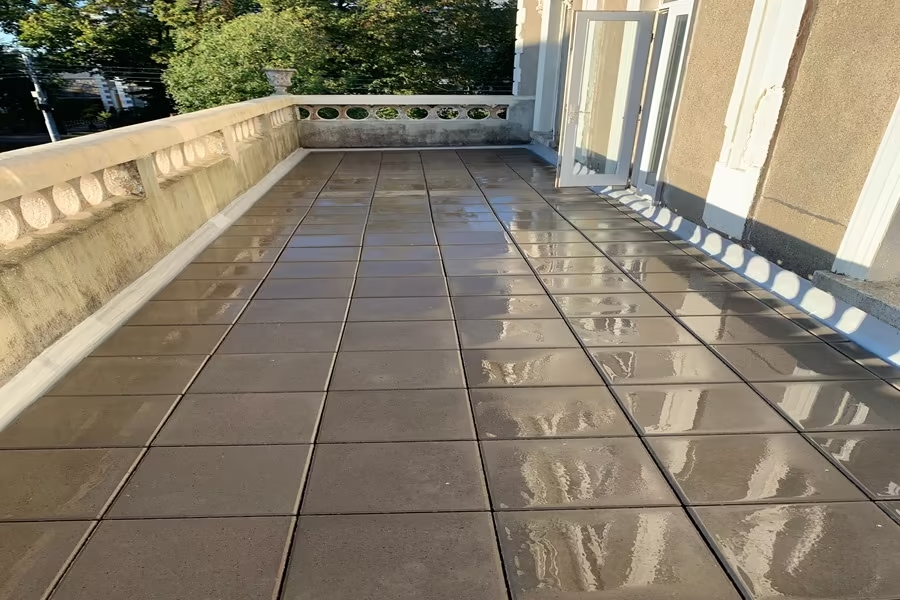
A small balcony leak can turn into an expensive structural problem long before you see a stain indoors. Balcony Waterproofing Methods matter because most damage starts quietly, under tile, behind trim, or inside a concrete crack that looked harmless last spring. In many U.S. homes, balconies sit above living rooms, garages, porches, or walkways, so water has more than one path to create trouble. Good protection is not about coating the surface and hoping for the best. It comes from slope, drainage, membranes, flashing, surface choices, and steady maintenance working as one system. Homeowners who care about long-term repair planning often follow trusted property improvement resources before hiring a contractor, because balcony failures are easy to underestimate from the outside. The goal is simple: move water off the structure before it can settle, freeze, expand, rot framing, corrode steel, or loosen tile. Done right, waterproofing feels almost invisible. Done poorly, it becomes the most expensive part of the view.
Read the Balcony Before You Choose the System
A balcony tells you what it needs before anyone opens a bucket of coating. The slope, surface material, railing posts, wall transitions, door threshold, and underside stains all show where water has been traveling. Many bad repairs fail because someone treats the top surface while ignoring how the balcony was built.
Why does deck drainage slope matter so much?
Water should leave a balcony without needing sunshine to rescue it. A proper deck drainage slope sends runoff toward the edge, scupper, or drain before it has time to sit against tile, grout, trim, or framing. Even a small flat spot can hold water long enough to expose weak seams.
The problem gets worse in colder U.S. regions. A Chicago balcony that holds water in November may face freeze-thaw stress by December. Water expands in cracks, then pulls the surface apart by tiny degrees. Nobody notices the first cycle. Everyone notices the repair bill after the fifth winter.
Slope also affects how safe the balcony feels underfoot. Too much pitch feels awkward. Too little pitch invites puddles. The sweet spot is boring, predictable drainage that works after every storm, even when leaves collect near the outlet.
How can early balcony leak repair prevent hidden framing damage?
A leak is not only a stain. It is a map. A brown mark on the ceiling below may mean water entered ten feet away, moved along framing, then finally found a weak drywall joint. That is why balcony leak repair should start with investigation, not a quick patch over the nearest crack.
Wood-framed balconies need extra caution. Once water gets under the walking surface, plywood can swell, fasteners can loosen, and joists can soften near the ledger. A homeowner in Oregon might see one loose tile and think it is cosmetic, while the real issue sits beneath the door pan.
Concrete balconies hide damage in a different way. Moisture can reach embedded steel and begin corrosion. Rust expands, concrete spalls, and the surface starts breaking from the inside out. The counterintuitive part is that the balcony may look solid until the damage has already gained momentum.
Balcony Waterproofing Methods Start Below the Finish Surface
Surface beauty does not protect a balcony by itself. Tile, pavers, stain, and decorative coatings only perform when the layer below them blocks water and manages movement. Balcony Waterproofing Methods fail most often when the finish gets treated as the defense instead of the cover.
Which balcony membrane systems hold up under daily weather?
Balcony membrane systems work best when they match the structure, climate, and finished surface above them. Sheet membranes bring consistent thickness and strong crack-bridging power when installed with careful seams. Liquid-applied membranes can fit odd shapes, corners, and posts when the installer respects cure times and coverage rates.
A Southern California balcony over a garage may need strong UV resistance because the surface sees sun almost all year. A balcony in New Jersey may need a membrane that handles freeze-thaw movement without splitting at corners. Climate decides more than brand loyalty does.
The detail work separates lasting systems from weekend fixes. Inside corners, outside edges, door thresholds, and railing penetrations create the first weak points. A membrane that looks perfect across the open floor can fail at one missed post base.
What should you know before installing exterior tile waterproofing?
Tile can make a balcony look finished, but tile is not waterproof. Grout absorbs moisture, cracks under movement, and lets water reach the layers below. Exterior tile waterproofing must sit under the tile, behind edge details, and up wall transitions where wind-driven rain can push water sideways.
Porcelain tile is common in many U.S. balcony projects because it resists absorption better than many natural stones. Still, the tile choice does not forgive bad prep. The substrate must be stable, sloped, clean, and ready for the membrane and setting materials.
One unexpected risk comes from dark tile in sunny climates. Dark surfaces heat up, expand, then cool down at night. That movement stresses grout lines and membrane bonds. A smart installation accounts for expansion joints instead of pretending the balcony will never move.
Edges, Railings, and Doors Decide the Real Outcome
Flat surfaces get most of the attention because they are easy to see. Edges, penetrations, and transitions cause the leaks that frustrate homeowners the most. Water does not care where the big open area looks perfect. It looks for the smallest path at the weakest detail.
How do railing posts create waterproofing weak points?
Railing posts often punch through the waterproofed surface, which creates a direct path for water unless every base is detailed with care. Surface-mounted posts need sealed fasteners, proper flashing, and compatible sealant. Fascia-mounted rails can reduce penetrations on the walking surface, but they still need strong edge detailing.
A coastal Florida balcony faces wind-driven rain that can push water around post bases from several directions. Salt air adds another problem by attacking metal parts and fasteners. The waterproofing plan must consider corrosion along with water movement.
Cheap caulk around a post base is not a system. It is a delay. Sealant has a role, but it should support flashing and membrane work, not replace them. When a post wiggles, the seal breaks, and water follows the movement.
Why do door thresholds need more attention than open deck areas?
The door threshold is where indoor comfort meets outdoor weather. That joint carries a heavy burden because wind, splashback, foot traffic, and building movement all meet in a narrow strip. A balcony can drain well and still leak if the door pan, flashing, or sill height is wrong.
Many older homes have low thresholds because they were built for convenience, not modern water control. A low door looks clean, but it gives water less resistance during heavy rain. In areas like Houston or Atlanta, a hard storm can push water against the door faster than the balcony drains.
The best detail creates layers of defense. The surface slopes away. Flashing turns water out. The membrane rises at the wall. The door system has a pan or sill detail that directs moisture back outside. One missing layer can undo the others.
Keep the System Alive After Installation
A balcony is not finished forever on the day the contractor leaves. Sun, snow, foot traffic, furniture legs, planters, and cleaning habits all wear on the waterproofing system. Long life comes from small checks that catch problems before water gets behind the defense.
What seasonal checks protect balcony membrane systems?
A spring inspection should focus on cracks, open seams, loose edges, stained soffits, and soft spots. Balcony membrane systems rarely fail everywhere at once. They usually fail at one seam, one drain, one corner, or one railing base, then spread from there.
Fall checks matter as much as spring checks. Leaves can block drains and scuppers, especially on balconies under trees. A homeowner in Pennsylvania might blame winter ice for damage, while the real cause was a clogged outlet that held water for weeks before the first freeze.
Cleaning should stay gentle. Harsh pressure washing can drive water into joints and damage coatings. A soft brush, mild cleaner, and open drain path often do more good than aggressive cleaning. Maintenance should protect the system, not punish it.
When should a homeowner call a professional instead of patching?
A homeowner can handle light cleaning and basic visual checks, but structural warning signs need a professional. Sagging, spreading cracks, rust stains, loose railings, spongy surfaces, or ceiling stains below the balcony deserve attention. Small patches can hide symptoms while the structure keeps getting worse.
Exterior tile waterproofing problems also need careful diagnosis. Loose tile may point to failed bonding, trapped moisture, poor slope, or movement below the tile assembly. Replacing one tile without fixing the water path can make the balcony look better while the failure continues underneath.
The smartest move is to document changes. Take photos after storms. Note where puddles form. Watch whether cracks grow. Contractors solve problems faster when they see a pattern instead of a single moment. Good records can save hours of guesswork.
Conclusion
A balcony should feel like extra living space, not a hidden liability attached to the house. The strongest protection comes from respecting water’s habits instead of fighting them after damage appears. Water wants low spots, gaps, cracks, and shortcuts. Your job is to give it a clean exit before it finds a destructive one. Balcony Waterproofing Methods work when the whole assembly is planned together: slope, membrane, flashing, drains, railings, doors, and maintenance. Skipping one part may not fail tomorrow, but it usually fails at the worst time, after moisture has already reached something expensive. That is why the best repair is often the one that feels almost overthought at the start. It costs less to build the water path correctly than to chase leaks through ceilings, walls, framing, and concrete later. Before you add tile, furniture, or planters, inspect the drainage and waterproofing details that keep the structure safe.
Frequently Asked Questions
What is the best way to waterproof a balcony over living space?
Use a complete system with proper slope, flashing, drains, and a tested membrane beneath the finished surface. Balconies over rooms need extra care because leaks can damage ceilings, insulation, wiring, drywall, and framing before the surface shows obvious trouble.
How often should a balcony waterproofing system be inspected?
Inspect it at least twice a year, usually in spring and fall. Also check after major storms, heavy snow, or long wet periods. Look for puddles, cracks, loose tiles, open seams, clogged drains, stains below the balcony, and movement around railing posts.
Can I waterproof a balcony without removing the tile?
Sometimes, but it depends on the condition below the tile. A surface coating may help minor issues, but it cannot fix trapped moisture, failed slope, loose tile, or damaged substrate. Serious leaks usually require removing layers to rebuild the waterproofing correctly.
Why does my balcony still leak after sealing the cracks?
Cracks may not be the only entry point. Water can enter at railing posts, door thresholds, wall joints, drains, tile grout, or edges. A leak may also travel sideways under the surface before appearing below, which makes simple crack sealing unreliable.
What causes balcony waterproofing to fail early?
Poor slope, weak flashing, bad surface prep, thin membrane coverage, clogged drains, and unsealed penetrations cause many early failures. Movement from temperature changes also stresses seams and grout. The failure usually begins at details, not the center of the balcony.
Is concrete balcony waterproofing different from wood balcony waterproofing?
Yes. Concrete balconies need crack control, compatible membranes, and protection against steel corrosion. Wood balconies need strong deck sheathing, sealed edges, flashing, and moisture protection around framing. Both need drainage, but the hidden damage patterns are different.
How much slope should an exterior balcony have for drainage?
Most balconies need a gentle slope away from the building toward a drain, scupper, or open edge. The exact pitch depends on local code, surface type, and design. The goal is simple: water should not sit in puddles after rain.
What are the first signs of balcony structural water damage?
Watch for soft spots, sagging, rust stains, cracked concrete, loose railings, peeling paint below the balcony, swollen trim, musty smells, and ceiling stains underneath. These signs mean water may have moved beyond the surface and into structural materials.