
A finished basement can feel safe, polished, and valuable until someone asks the one question many homeowners avoid: could a person escape from down there during a fire? That question sits at the heart of egress window installation, especially when a basement becomes a bedroom, office, guest suite, or rental-ready living space. In many U.S. homes, the basement window was never designed for rescue. It was designed for light, air, or nothing more than code from another era.
Local rules matter, yet the core idea stays plain. A basement needs an opening that a person can use and firefighters can access in an emergency. That is why homeowners planning a remodel often read trusted home improvement guidance before they cut concrete, order windows, or promise that a basement room can count as legal living space.
The International Residential Code model requires basements, habitable attics, and sleeping rooms to have at least one openable emergency escape and rescue opening, with added rules when a basement contains sleeping rooms. A small glass panel does not meet the goal. The opening has to work under pressure, in smoke, in the dark, and without a tool hunt at the worst possible moment.
Code Numbers That Shape a Safe Basement Exit
Most homeowners start with the wrong measurement. They measure the window frame, the glass, or the hole in the foundation and assume one of those numbers answers the code question. Inspectors care about the clear space left when the window is open, because that is the space a person can pass through.
Why egress window size is not the same as window size
The required opening is about usable space, not product size. Under common IRC-based standards, an emergency escape and rescue opening needs at least 5.7 square feet of net clear opening, with a net clear height of at least 24 inches and a net clear width of at least 20 inches. That means a window can look large on the wall and still fail if the sash blocks too much of the opening.
A common trap is the 20-by-24 assumption. Those numbers meet the minimum width and height separately, but they do not create enough total opening area. Hopkins, Minnesota explains that a 20-inch by 24-inch opening gives only 3.3 square feet, so the math still fails the larger net-clear-opening rule.
How basement window code treats sill height
The sill height matters because escape cannot depend on athletic skill. Many IRC-based rules set the maximum sill height at 44 inches above the floor when a window serves as the emergency escape and rescue opening. That number keeps the opening reachable for most people without turning a fire escape into a climb.
Older U.S. basements often miss this point. A window may be wide enough but set too high, especially in raised foundations or homes with short basement walls. In that case, the fix may involve lowering the rough opening, adding an approved step detail where allowed, or changing the window type so the usable opening improves without weakening the wall.
Egress Window Installation Requirements That Affect the Outside Wall
The inside measurement is only half the job. Once you cut below grade, the outside of the house becomes part of the escape route. Soil, drainage, window wells, ladders, and snow all decide whether the opening works after the remodel is finished.
Window well requirements that cannot be guessed
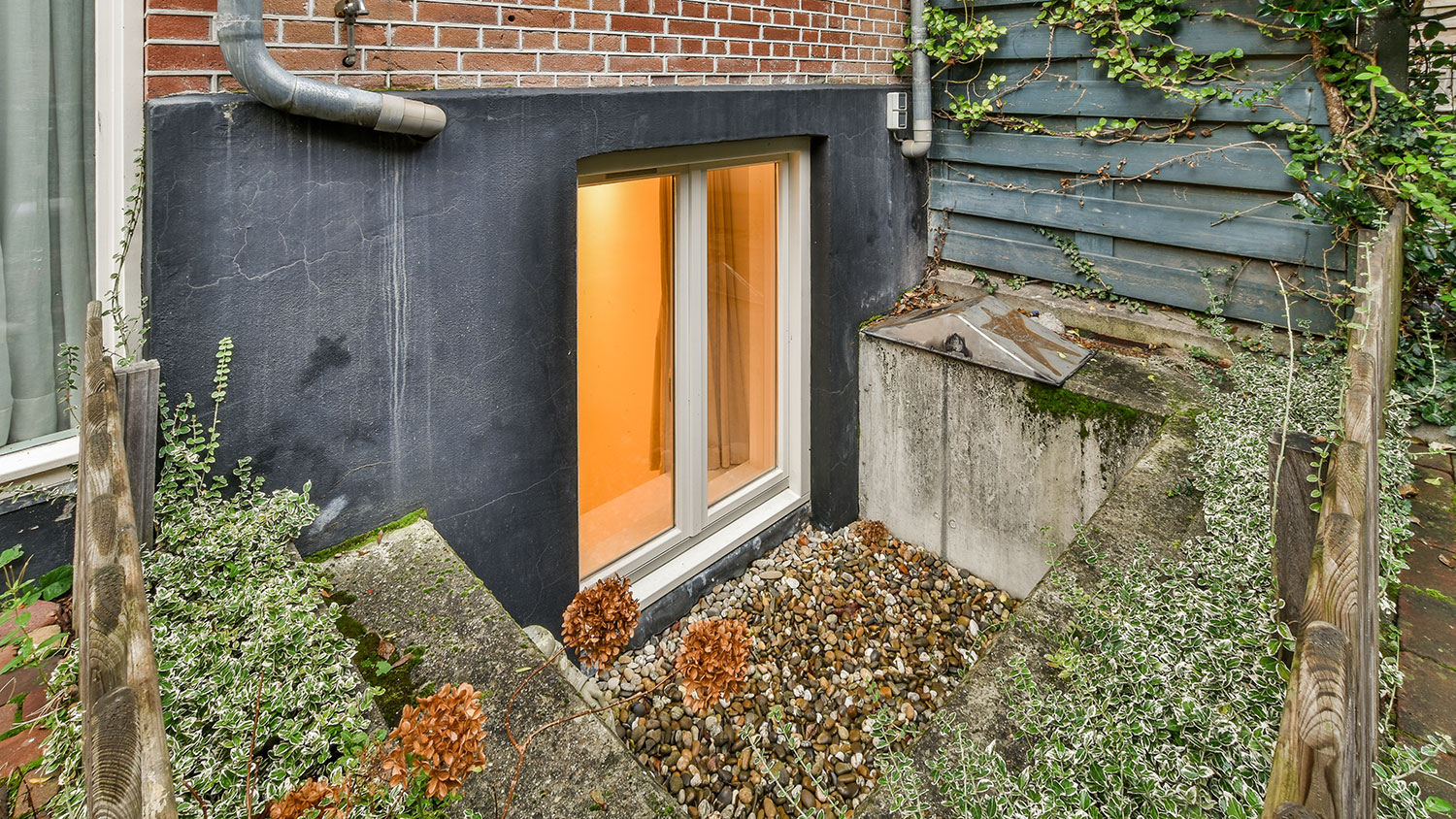
Window well requirements usually surprise homeowners because the well has to serve more than one role. It must give the window room to open fully, leave enough standing space, and provide a usable path out of the ground. Common IRC-based guidance calls for at least 9 square feet of horizontal well area, with a width and projection of at least 36 inches.
The counterintuitive part is that a deeper well does not automatically make the space safer. A deep, narrow metal well can feel like a chute, and a person may struggle to turn, climb, or help a child out. The safer design often looks less tidy on paper because it gives the body more room to move.
Drainage decides whether the opening stays usable
Water is the quiet failure point in many basement projects. A window well that meets size rules can still become a pond during a Midwest thunderstorm or a Northeast thaw. The Minnesota residential code fact sheet states that window wells must be designed for proper drainage through the foundation drainage system or an approved alternative method, with exceptions for some well-drained soils.
This is where cheap work shows fast. A contractor can cut concrete and install a window in a day, but drainage mistakes may not show until the first heavy rain. A flooded well is not only a leak risk. It can also block the emergency escape opening when the household needs it most.
Choosing the Right Window Type Without Fighting the Code
The best window is not always the biggest one on a showroom wall. In basements, the right unit balances opening area, wall height, foundation structure, and the way a person would move through it. That is why window style deserves more attention than many homeowners give it.
Casement, slider, and double-hung choices
Casement windows often work well because the sash swings out and leaves a generous opening. Sliders can work too, though only part of the unit opens, so the full frame usually needs to be wider. Double-hung windows can pass in some cases, but they often need more vertical height because only part of the window opens at one time.
The egress window size listed on a product sheet should be checked against the actual net clear opening. Manufacturers often label units for egress use, but the final answer still depends on the installed position, hardware, and whether the window opens fully from inside the room. A salesperson’s promise is not a permit approval.
Why an emergency escape opening must work without tools
A legal emergency escape opening must be operable from inside without keys, tools, or special knowledge. That rule sounds simple until you look at real basements with security bars, tight screens, storage bins, child locks, or furniture placed under the window.
Safety often fails through habits, not materials. A homeowner installs the right window, passes inspection, then parks a treadmill under it or stacks holiday tubs in front of the sill. The code can approve the opening on Tuesday, but your daily use of the room decides whether it still works six months later.
Permits, Inspections, and Real-World Remodel Decisions
A basement window project touches structure, life safety, moisture control, and property value. That mix makes permits more than paperwork. In many American cities and counties, the permit review is the moment when local amendments, zoning limits, property-line concerns, and drainage details finally come into view.
How local rules can change the plan
Most U.S. jurisdictions base residential rules on a version of the IRC, but adoption years and amendments vary. One state may follow one edition with amendments, while a nearby city may enforce extra details for wells, drains, historic districts, or flood-prone lots. Minnesota’s state guidance, for example, says its residential code adopts the 2018 IRC with amendments, and that its state building code applies across the state.
That is why basement window code should be confirmed before buying materials. A homeowner in Chicago, Denver, Atlanta, or rural Pennsylvania may face the same safety concept but a different permitting path. The smart move is to bring the rough plan, window specs, well details, and drainage approach to the building department before concrete gets cut.
When replacement windows and new bedrooms are treated differently
Replacement windows can fall under different rules than new sleeping rooms, depending on the adopted code and local amendments. Minnesota’s guidance notes conditions where replacement windows may be exempt from some sill-height and opening-size rules if they use the largest standard window that fits and keep or improve the operating style, while new sleeping rooms in existing basements need emergency escape and rescue openings.
That distinction matters during resale. A basement room with a couch and television may be marketed as finished space, but a basement bedroom carries a higher safety burden. If you want the space to function as a bedroom, guest room, or future rental area, egress window installation should be planned as part of the room design, not added after the drywall looks complete.
Conclusion
A basement exit is not a decorative upgrade. It is a promise that the room below your home can be used without pretending danger will behave politely. The best projects start with code, but they do not stop there. They think through reach, body movement, weather, drainage, furniture placement, and the way families live when nobody is inspecting anything.
For U.S. homeowners, the smartest path is simple: verify the local code, choose a window with documented net clear opening, design the well as a true escape space, and hire someone who respects both structure and water control. A rushed job may look finished from the curb, but the basement will tell the truth during rain, inspection, or emergency.
Treat egress window installation as life-safety work first and remodeling work second. Before you finish the basement, call your local building department and confirm the exact requirements for your address.
Frequently Asked Questions
What are basement egress window requirements for a bedroom?
A basement bedroom usually needs an operable emergency escape and rescue opening that leads outside. The window must meet local rules for net clear opening, opening height, opening width, sill height, and access through a window well if the opening is below grade.
How big does an egress window need to be in a basement?
Many IRC-based rules require at least 5.7 square feet of net clear opening, with at least 24 inches of clear height and 20 inches of clear width. Some grade-floor or below-grade exceptions may allow 5 square feet, depending on the adopted local code.
Does every finished basement need an egress window?
Many finished basements need an emergency escape and rescue opening, especially if the space is habitable or includes a sleeping room. Some limited exceptions may apply, such as small mechanical-only basements or sprinkler-protected areas, but local approval controls the final answer.
Can a small basement window count as an egress window?
A small basement window counts only if it meets the required net clear opening, sill height, operation, and outside access rules. Glass size alone does not matter. The usable opening after the window is fully open is what inspectors check.
Do basement egress windows need a window well?
A window well is usually needed when the emergency escape window opens below grade. The well must be large enough for the window to open fully and for a person to escape. Deeper wells may also need permanent ladders or steps.
How deep can a window well be without a ladder?
Many IRC-based rules require a permanently attached ladder or steps when the window well depth is more than 44 inches. The ladder must remain usable when the window is fully open, so placement matters as much as the ladder itself.
Do I need a permit to install a basement egress window?
Most cities and counties require a permit because the project may involve cutting a foundation wall, changing structure, adding drainage, and creating a life-safety opening. Always check with your local building department before ordering the window or hiring a contractor.
Can I install a basement egress window myself?
A skilled homeowner may handle parts of the work, but cutting foundation walls, setting drainage, and meeting code can go wrong fast. Professional installation is usually the safer choice, especially when the wall is concrete, the soil holds water, or the opening needs structural changes.